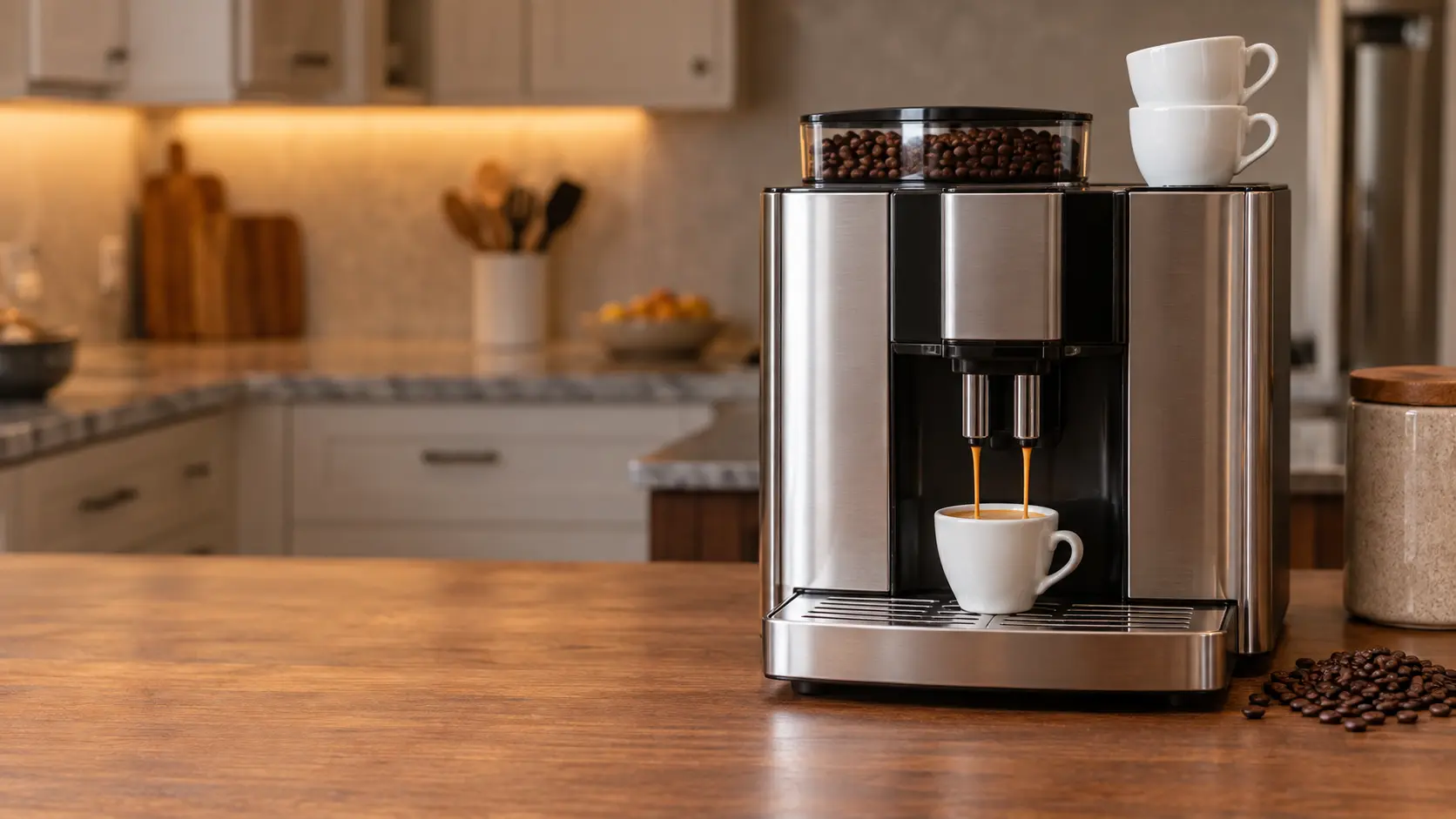
What scale does inside a coffee machine
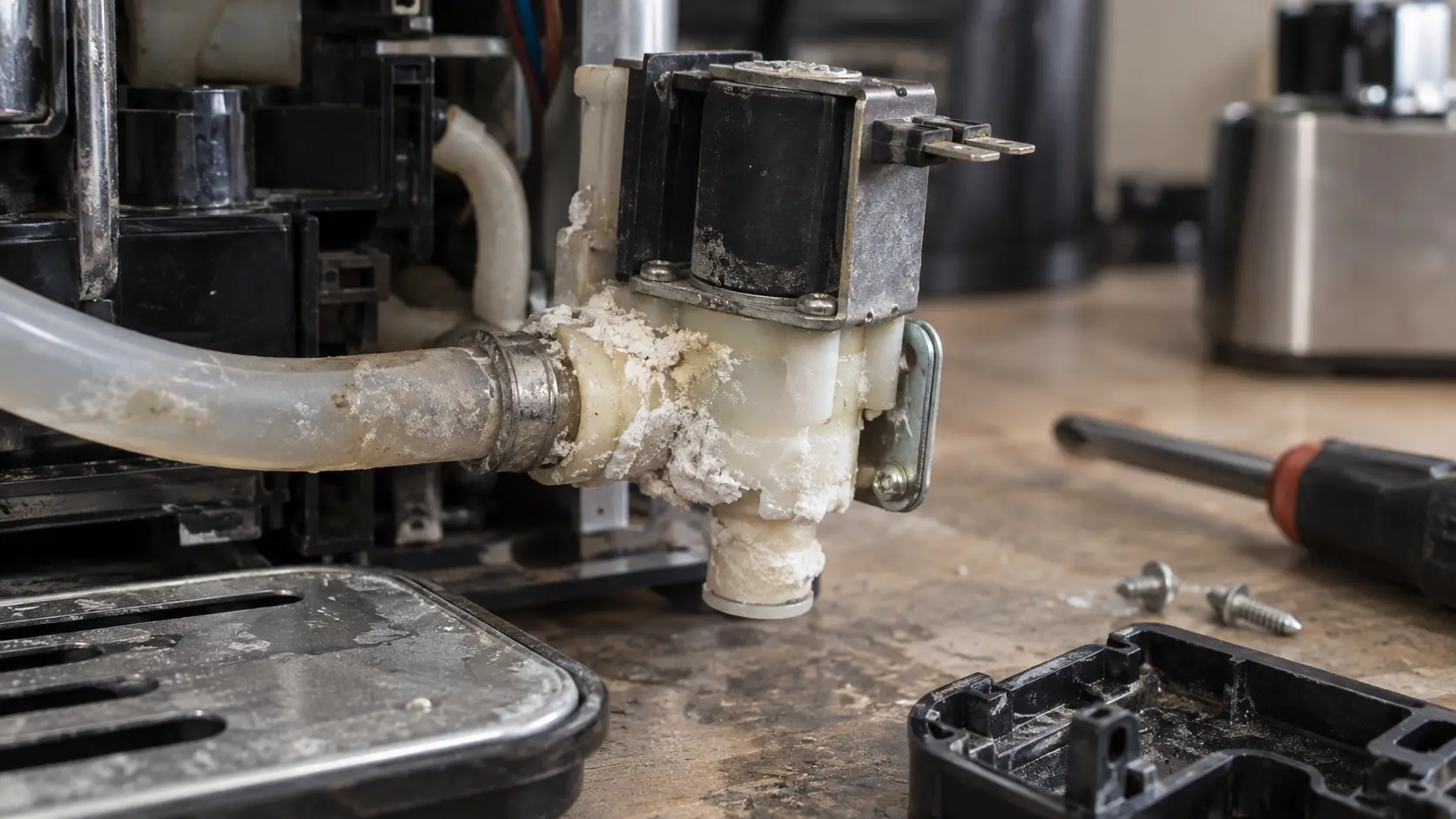
Hard water carries dissolved calcium and magnesium. When it is heated, part of that comes out as a chalky crust, and a coffee machine heats water dozens of times a day. The crust builds on the heater walls, narrows the small pipes and valve seats, and settles in the brew unit, where it roughens the seals.
The USGS notes that hard water heated in a home water heater forms calcium carbonate deposits that can shorten equipment life and clog pipes. In a coffee machine the pipes are the width of a drinking straw or less, so it takes far less scale to cause trouble: slower flow, cooler coffee, a louder pump, and eventually a valve that will not open.
How the machine knows it is due
Automatic machines do not sense scale directly. They count water and steam and compare the total with the hardness level you entered. Miele's CVA 6405 offers four levels, from soft (up to 8.7 grains per gallon) to very hard (above 21.9), and ships set to level 3. JURA's E8 accepts a setting anywhere from 1 to 30 °dH. A wrong setting makes the reminder come too late or too early.
The filter exception
Some makers change the rule when their filter cartridge is fitted. JURA's E8 manual says that with its filter cartridge active the machine does not ask for a descale at all, and it prompts for a new cartridge instead. That only holds if the cartridge is changed when asked; an expired filter lets scale through.
Source: USGS Water Science School — Hardness of Water — Heated hard water forms calcium carbonate deposits that can reduce equipment life and clog pipes
What the makers' manuals actually ask for
Every automatic machine has its own descaling program, and the steps differ enough that your own model's manual is the script to follow. Two examples show how far they vary even though both end in the same place.
Miele's CVA 6405 counts down from 50 remaining drinks once descaling is due and locks drinks out when the count reaches zero. The program takes about 20 minutes: two Miele descaling tablets dissolved in lukewarm water filled to the descaling mark in the tank, followed by a rinse with fresh water to the same mark. Too much or too little water, the manual warns, stops the process early.
JURA's E8 has the owner dissolve one blister of three JURA descaling tablets in 17 oz of lukewarm water, pour it into the empty tank and empty the drip tray and grounds container when prompted. The program runs for about 40 minutes, with water flowing from the frother and then the coffee spout.
- Use the maker's own tablets or liquid, not a general-purpose descaler.
- Measure the water exactly; the ratio is part of the program.
- Keep a large container under the outlets and empty the drip tray when asked.
- Rinse the tank thoroughly before refilling with fresh water.
- Wipe up splashes at once; descaler can mark stone and delicate surfaces.
Source: Miele — Operating and Installation Instructions, CVA 6405 built-in coffee system (en-US) — Four hardness levels, factory level 3; countdown from 50 drinks, lockout at 0; about 20 minutes; two tablets in lukewarm water to the mark; wrong water amount stops the process; must run to the end; acids other than citric or chlorides may damage; rinse tank and drip tray after; mineral water builds scale; JURA — E8 Instructions for Use (North America) — Hardness 1–30 °dH; no descale prompt with filter cartridge in use; three tablets in 17 oz lukewarm water; about 40 minutes; vinegar may damage or leave residues; interrupted descale may damage the machine
Why vinegar and shortcuts cause trouble
Vinegar dissolves scale, and plenty of general advice suggests it for simple drip brewers. Automatic espresso machines are a different case. JURA's manual names vinegar among the non-recommended descaling agents that may damage the machine or leave residues. Miele warns that agents containing acids other than citric acid, or substances such as chlorides, could damage its machines.
Stopping a program halfway is the other shortcut to avoid. Both makers say the descale must run to the end once started, and JURA warns that an interrupted descale may damage the machine. Start it when you have the time to stay nearby and empty the tray.
- Vinegar or any household acid the manual does not name.
- A solution mixed stronger or weaker than the stated ratio.
- Switching the machine off or unplugging it mid-program.
- Mineral water in the tank, which Miele says builds scale in its machines.
Source: Miele — Operating and Installation Instructions, CVA 6405 built-in coffee system (en-US) — Four hardness levels, factory level 3; countdown from 50 drinks, lockout at 0; about 20 minutes; two tablets in lukewarm water to the mark; wrong water amount stops the process; must run to the end; acids other than citric or chlorides may damage; rinse tank and drip tray after; mineral water builds scale; JURA — E8 Instructions for Use (North America) — Hardness 1–30 °dH; no descale prompt with filter cartridge in use; three tablets in 17 oz lukewarm water; about 40 minutes; vinegar may damage or leave residues; interrupted descale may damage the machine
How each kind of machine is descaled
A tank-fed built-in and a countertop bean-to-cup machine follow the steps above, with the tank lifted out through the front door or from the top. On a plumbed built-in, follow the display closely, and check in the manual for your model whether the tank is filled by hand for the program.
Manual espresso machines
Machines with a portafilter have their own routine, run through the group and the steam wand, and the manuals differ widely from one maker to the next. Take the portafilter out first, keep a container under both outlets and follow your manual step by step.
After the program
Rinse the tank and the drip tray, as Miele asks, so no descaler reaches the next cup. Pour the first coffee away if the manual suggests it. If the reminder will not clear after a complete program, that is a matter for the display guide and possibly a visit.