

Built-In Coffee System Repair
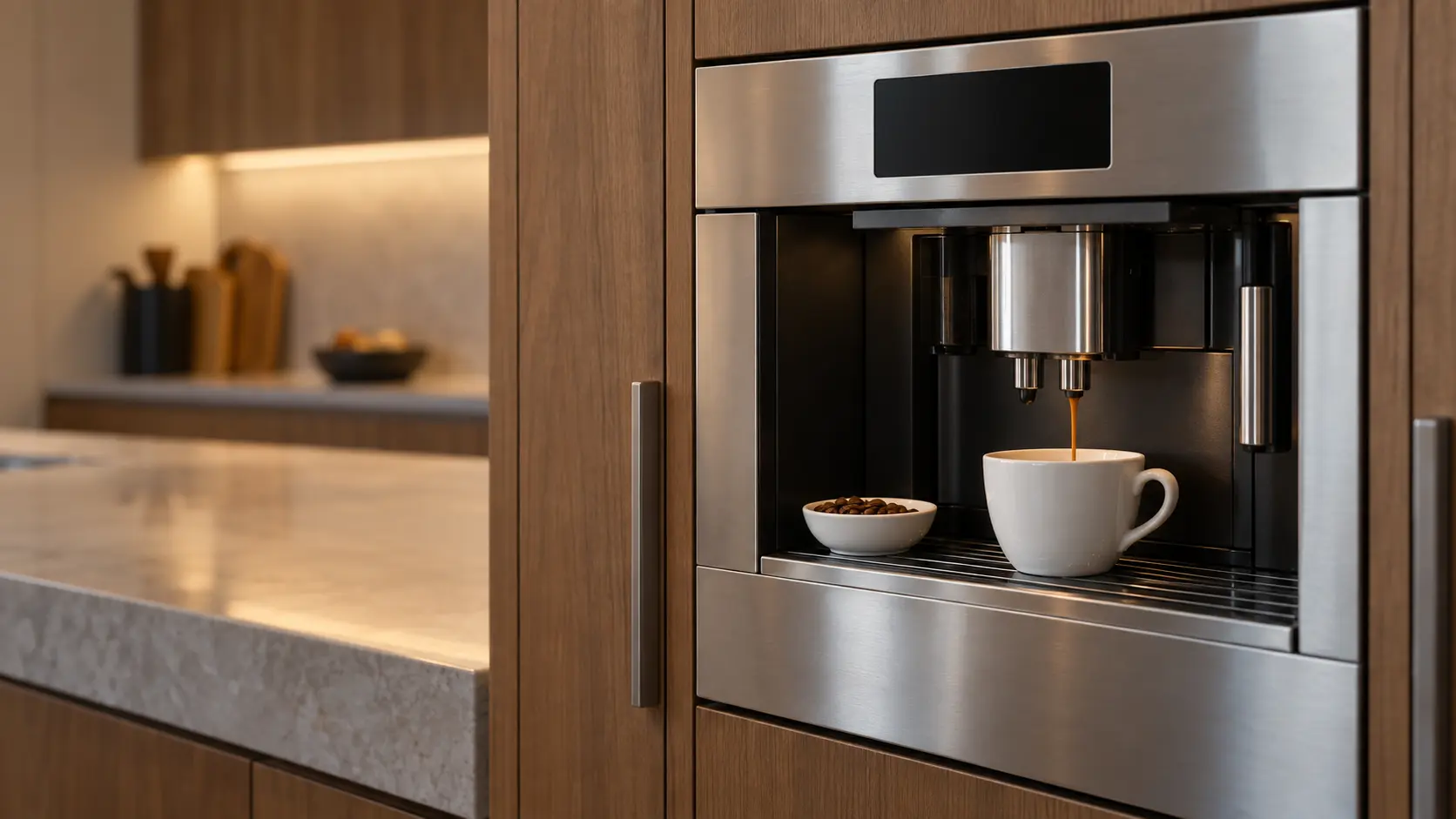
The coffee machine set flush into a tall kitchen cabinet, filled from a water tank behind its front, grinding beans and brewing each cup on its own before sliding out on rails for service.
Mon–Sat, 8am–8pm
- 4 things that fail on it
- 10 makes build it
- 6 problems it shows
Book a visit
Three short steps, about a minute.
or call (844) 551-4777
Loading appointment form…
The appointment form couldn’t load. Please try again.
Is yours
a built-in?
A built-in coffee system is a complete bean-to-cup coffee machine sized to sit in a tall cabinet, usually at eye level in the same column as other built-in appliances. From the kitchen you see a stainless or glass front, a spout block that lifts or lowers to the height of the cup, and a display. Behind the front, or behind a hinged door on the side, sit the removable water tank, the bean hopper with its burr grinder, the brew unit that tamps and presses the grounds, the pump and flowmeter that meter each shot, and the thermoblock that heats the water on the way through. A milk tube runs from a jug or a small cooled container to the frother in the spout block, and a grounds container and drip tray catch what is left over, each watched by its own sensor. The whole chassis rests on telescopic rails so it can be drawn forward for service without taking the cabinet apart. Because the cabinet hides the sides and the back, most visits start by reading the machine's own messages and service menu before it is slid out.
 What fails on a built-in coffee system
How to tell
The coffee machine sits flush in a tall cabinet with trim on every side, and nothing of it shows on the counter.
Opening the front or a side door reveals a water tank you lift out to fill, with the bean hopper beside it.
The spouts are set into the front itself, and the drip tray and grounds container slide out together from below them.
There is no water line or drain hose behind it: the machine is fed only from its own tank.
Not yours?Plumbed coffee systemCountertop espresso machineManual espresso machine
What fails
on this design.
On a built-in coffee system: brew unit seals and its drive, the tank seat valve and its level sensor, thermoblock scale and its thermal cutout, grounds and drip tray sensing.
The problems it showsBrew unit seals and its drive
The brew unit is pushed up and down thousands of times, and its piston seals harden and let water bypass the puck. On makes with a fixed unit the small gear motor that drives it can stall, which the display shows as a unit that will not reach its home position.
The tank seat valve and its level sensor
The tank sits on a spring valve and a float or magnet tells the board it is there. Scale or a cracked seat makes the machine say the tank is empty or missing while it is full, or lets water weep onto the cabinet floor.
Thermoblock scale and its thermal cutout
Hard water leaves a crust inside the narrow heater passage. Coffee comes out lukewarm, steam sputters, and in the end a one-shot thermal cutout opens and the machine stays dark until it is replaced.
Grounds and drip tray sensing
The built-in version knows the tray is in by a contact or a magnet at the back of the drawer. A bent contact or a magnet knocked loose leaves a message about the container that no emptying will clear.
Getting at it,
and whether to.
The tank, the bean hopper, the tray and the grounds container come out from the front, so a good part of the checks happen with the coffee machine still in its cabinet.
What repairs costOn the visit
- Drawing the machine forward on its rails and opening its casing is the technician's work: the power lead and the rail locks sit behind it, and the machine is heavier than it looks.
- Please switch it off and let it cool before the visit, and do not reach past the brew-unit door while it is warm; emptying the tray and the grounds container is all it needs from you.
- If the cabinet has a trim kit or a door that folds away in front of the machine, tell us the maker and model so the rails and trim can be checked before we arrive.
Repair or replace
A built-in coffee system is nearly always worth repairing, because the cabinet opening, the trim kit and the rails were made for that one model and a different make seldom drops into the same niche. Seals, a tank valve, a sensor, a thermal cutout or a descale are modest jobs. A new brew unit, a grinder or a pump is still usually the better choice on a machine that otherwise pours well; on an early model with a board no longer made, the technician lays out both routes before you decide.
Book a visit for a built-in coffee systemThe problems
it shows.
On a built-in coffee system, most often coffee machine leaking water onto the counter or into the cabinet.
All problems
Coffee Machine Leaking Water Onto the Counter or Into the Cabinet
6 causes, cheapest first

No Coffee Coming Out of the Coffee Machine
6 causes, cheapest first

Coffee Machine Brew Unit Stuck or Will Not Come Out
6 causes, cheapest first
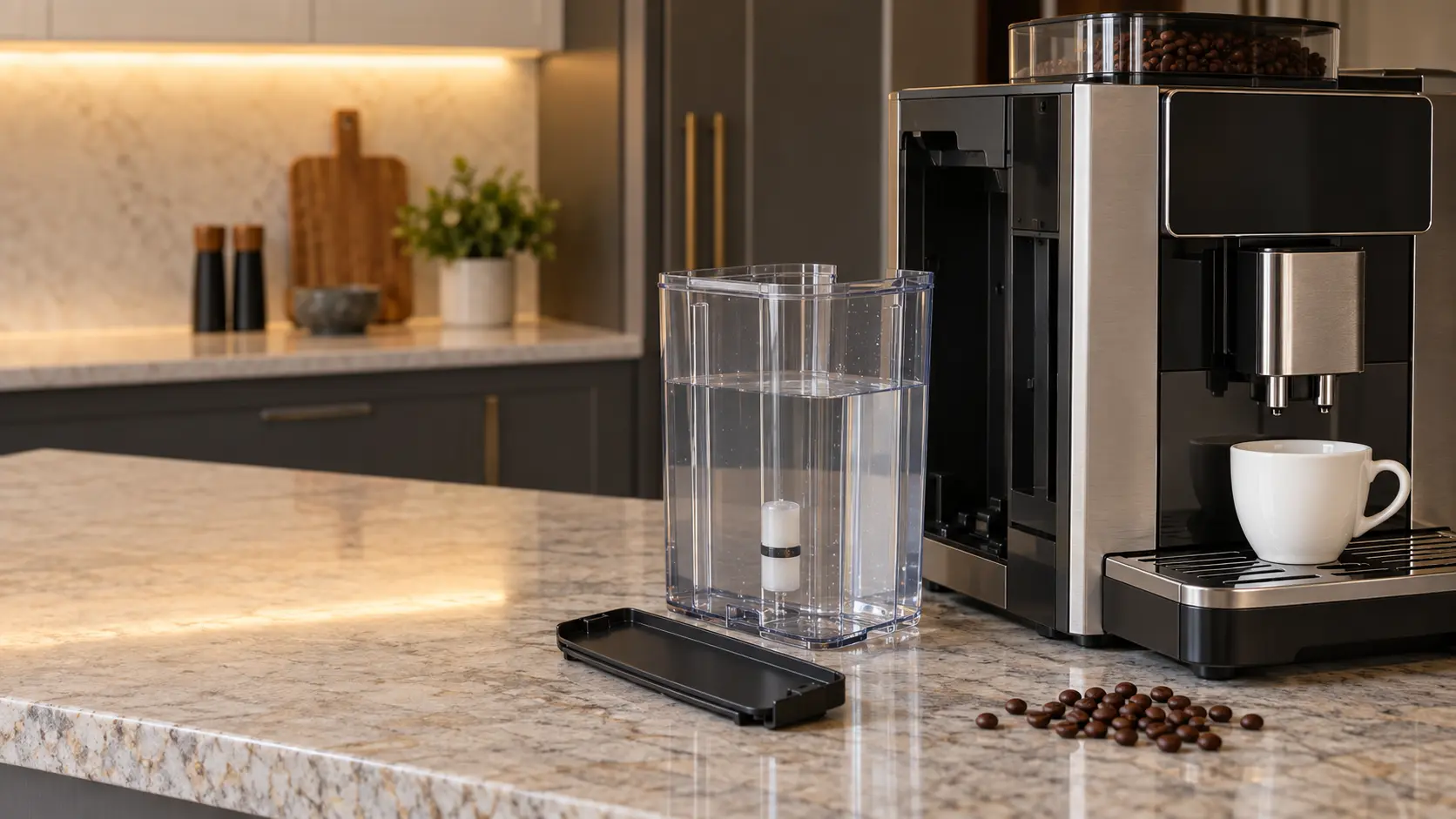
Coffee Machine Not Detecting the Water Tank
6 causes, cheapest first

Coffee Machine Empty Grounds Message Will Not Clear
6 causes, cheapest first
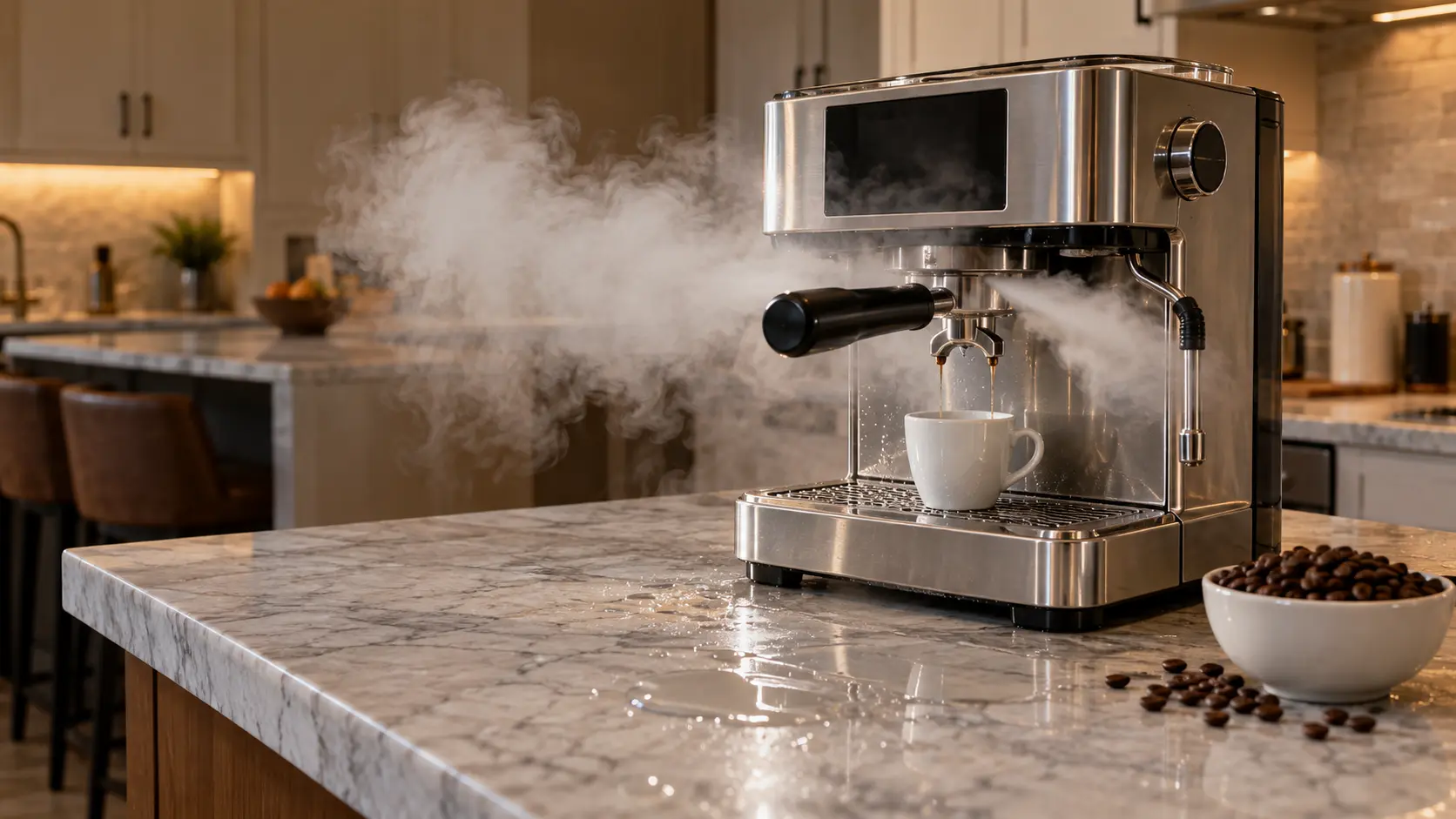
Coffee Machine Spraying Steam or Scalding Water
6 causes, cheapest first
Who builds
a built-in.
10 of the makes on this site build a built-in coffee system. Each mark opens that make's own page.
All 12 brandsBuilt-in coffee system repair,
where we come out.
9 metros, each with its own page.
All service areasTampa BayFL · 31 areas
Miami / South FloridaFL · 47 areas
New York MetroNY · 75 areas
HoustonTX · 36 areas
ChicagoIL · 50 areas
Los AngelesCA · 95 areas
San DiegoCA · 31 areas

Questions about
built-in coffee systems.
Can a built-in coffee system be serviced without taking the cabinet apart?
Why does my built-in say the water tank is empty right after I filled it?
Is the brew unit on my built-in something I can take out and rinse?
My built-in coffee system sits right above another appliance. Does that matter for the repair?
Back to your everyday
Is it a built-in coffee system?
Say so when you book — it changes what the technician brings and how the visit is planned.