How each kind of coffee system gets its water
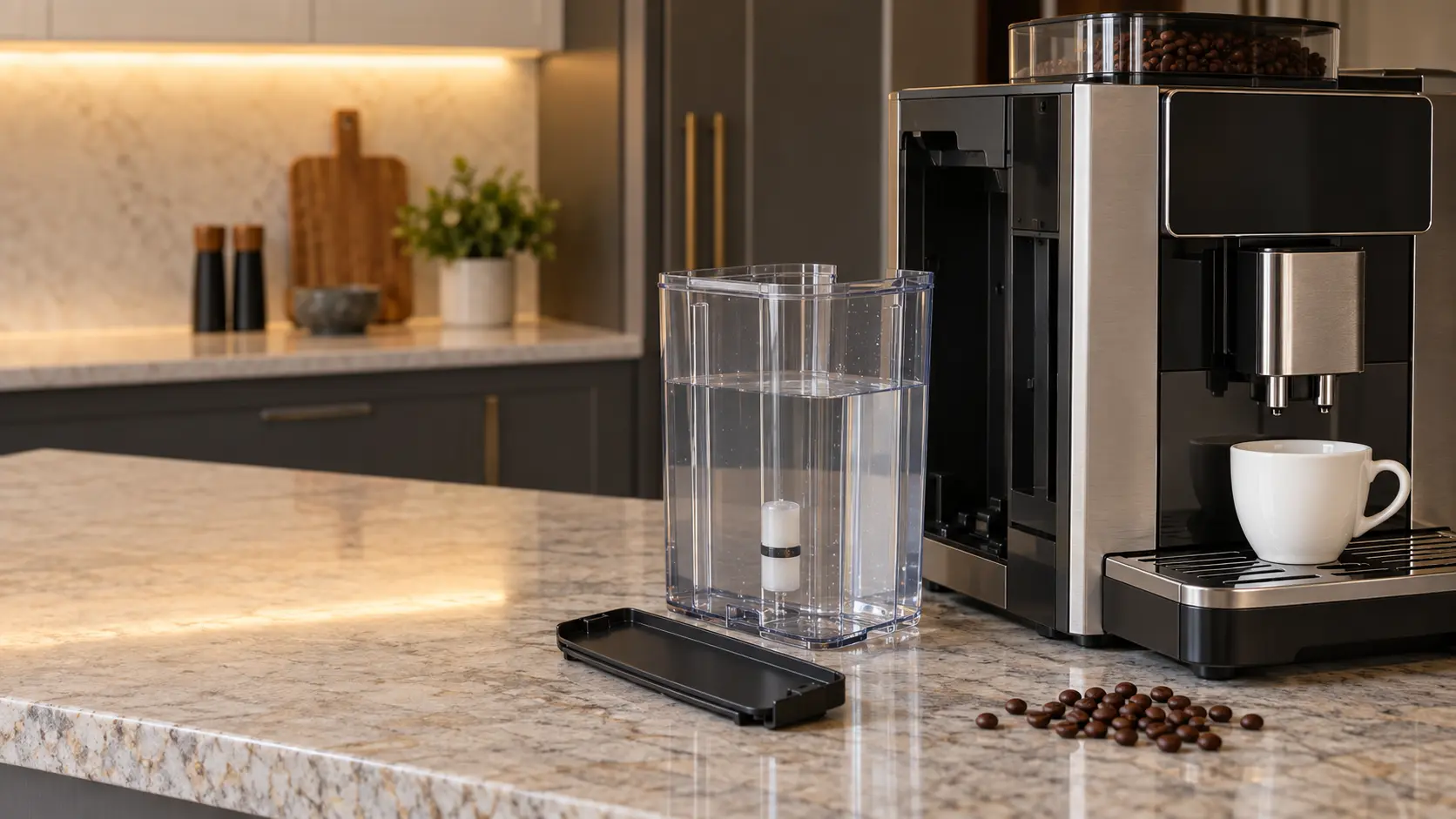
A tank model has a removable reservoir behind the front door or at the side. You lift it out, fill it at the sink with fresh, cold water and slide it back until it seats. A float or sensor tells the board how much is left, and the display asks for more when it runs low.
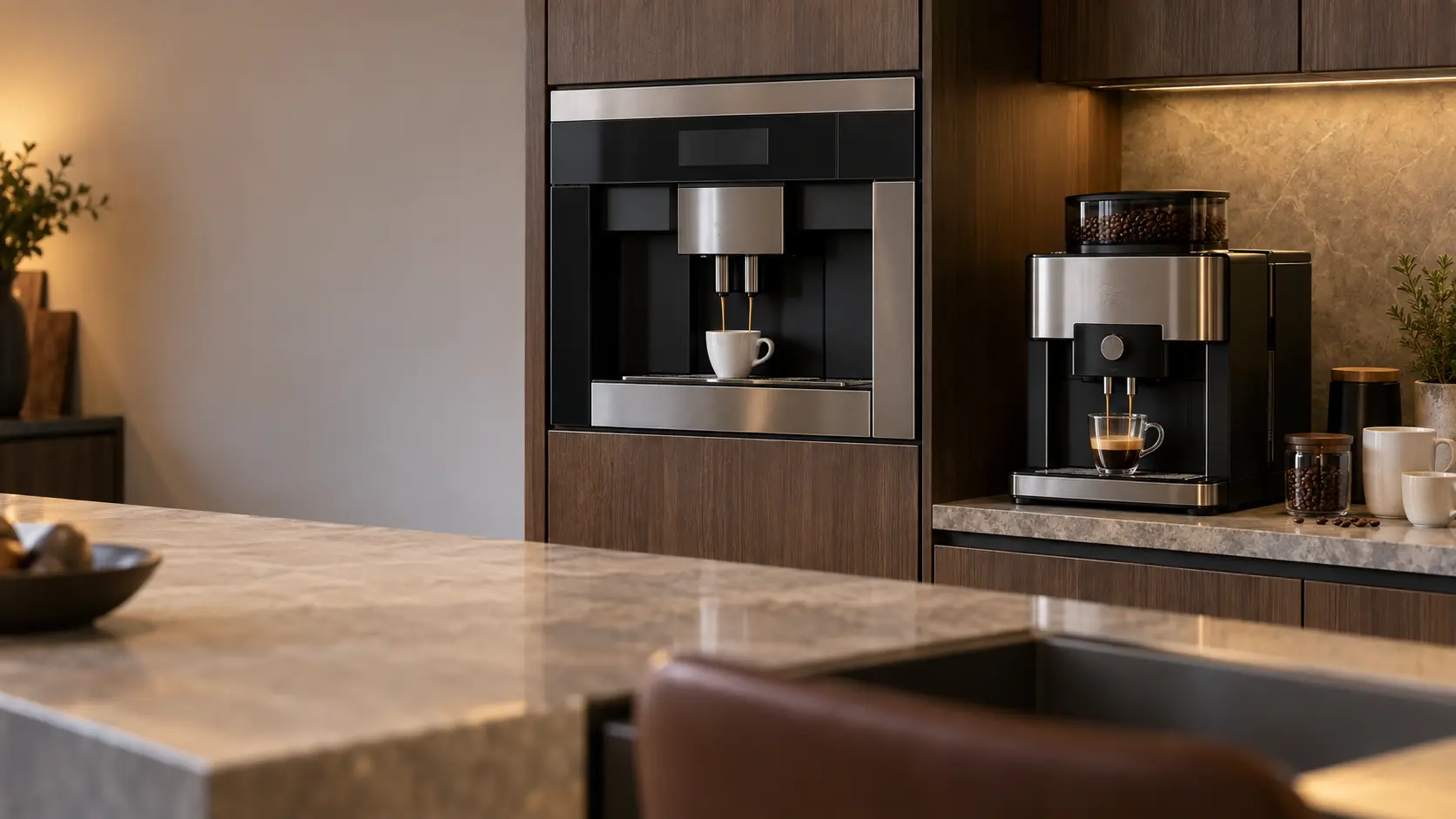
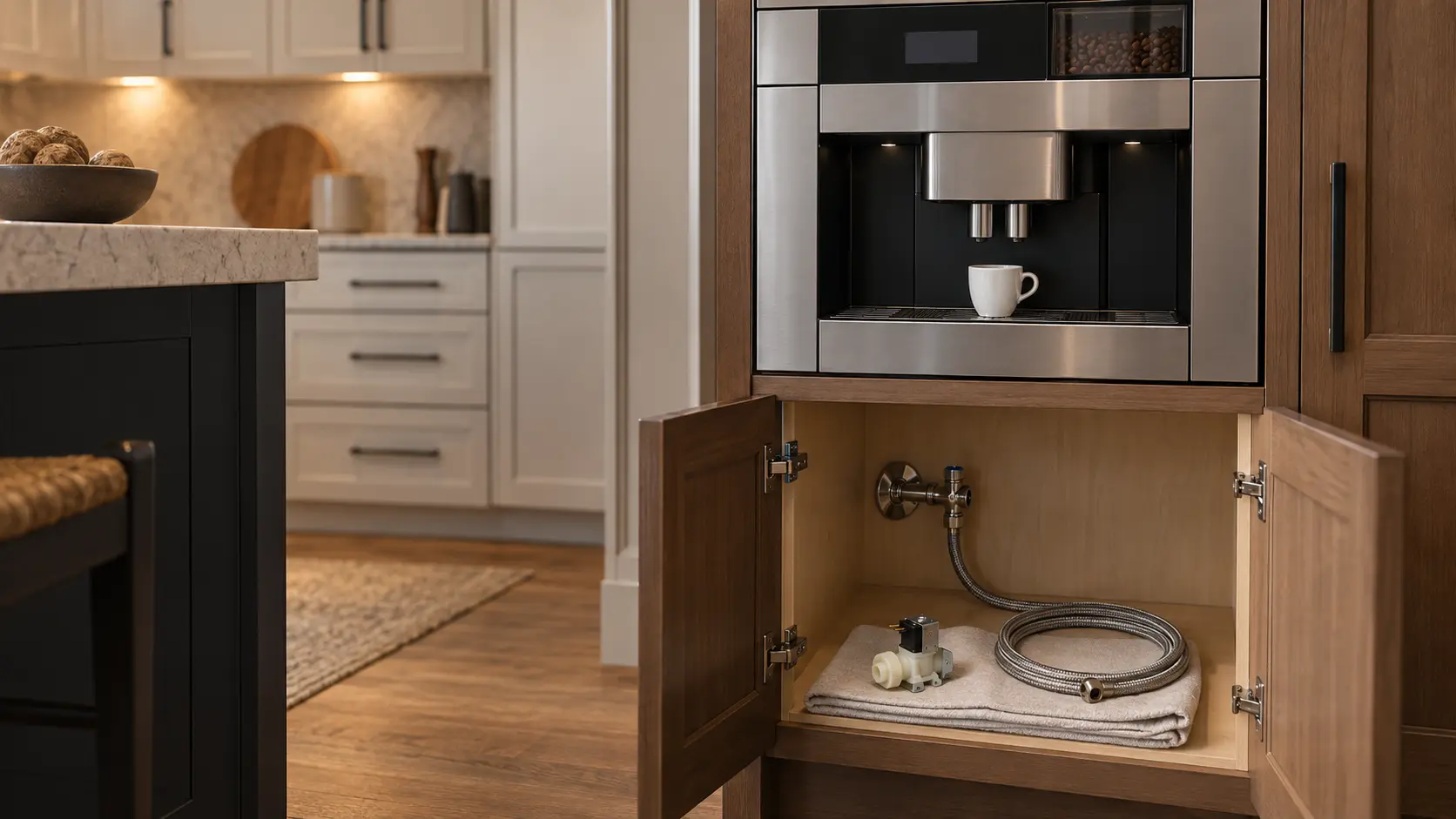
A plumbed coffee system is connected to the house supply with a small flexible line and a valve. On many built-ins the connection simply keeps an internal tank topped up, so the brewing side of the machine works exactly like a tank model. On Miele's CVA 6405 the owner chooses the water supply in the settings: with the water connection on, the tank is filled automatically; with it off, the machine asks for manual filling.
The tank does not disappear
Because many plumbed models still hold water in a tank, they still need that tank cared for. Miele's instructions ask owners of a connected machine to empty the tank once a day, and to change the water daily on a tank-fed one, to prevent a build-up of bacteria. Plumbing saves the trip to the sink, not the rinse.
Source: Miele — Operating and Installation Instructions, CVA 6405 built-in coffee system (en-US) — Water connection on or off in settings; empty the tank daily on a connected machine; qualified professional, cold line, 14.5–145 psi, accessible shutoff, no old hoses, no kinked sleeve; no hot-water connection; water-damage protection conditions; shut each appliance's supply for long absences; no mineral or reverse-osmosis water
What a water line asks of the kitchen
The line is small, but the rules around it are strict. Miele's installation section says the machine must be connected by a qualified professional, with the power disconnected first and the water turned off, to a cold line that is connected directly to the supply so water does not stand in it. Water left standing in a dead leg of pipe affects the taste of every drink.
The same instructions set a pressure window of 14.5 to 145 psi, call for a valve that can cut the supply off, fitted between the house line and the machine's steel hose and still within reach once the unit is built in. They also rule out reusing an old hose, and warn that a damaged or bent sleeve on the intake hose will leak.
- A cold-water supply, never the hot side.
- A shutoff valve that can be reached with the machine installed.
- Pressure inside the maker's stated range; a pressure-reducing valve if the house runs high.
- A new hose from the maker's kit, routed without kinks or pinches behind the rails.
- Plumbing to local code; a qualified plumber makes the connection.
Source: Miele — Operating and Installation Instructions, CVA 6405 built-in coffee system (en-US) — Water connection on or off in settings; empty the tank daily on a connected machine; qualified professional, cold line, 14.5–145 psi, accessible shutoff, no old hoses, no kinked sleeve; no hot-water connection; water-damage protection conditions; shut each appliance's supply for long absences; no mineral or reverse-osmosis water

The leak path a tank model does not have
A tank machine can only spill what its reservoir holds. A plumbed machine is connected to the whole house supply. If a fitting weeps or a hose splits while nobody is home, water keeps coming until someone closes the valve, and inside a tall cabinet it runs down the back and under the base before anyone sees it.
Makers answer this in different ways. Miele describes a built-in protection system against water damage that works only when the machine is correctly installed and connected, and only if the supply is shut off during long absences. The manual adds a point many owners miss: closing the main to the house before a long trip may still leave a risk, so the valve for each appliance should be closed as well.
Signs of a slow leak behind a built-in
- A swollen or darkened edge on the cabinet floor below the machine.
- A musty smell when the cabinet door or the base panel is opened.
- Water beading on the toe kick below the column.
- A tank that overfills or a drip tray that fills faster than usual.
Shutoff habits worth keeping
Know where the valve is before you need it; on most kitchens it sits in the sink base or the cabinet beside the column. Close it before a vacation, and open it slowly on return while watching the hose connection for drips.
Source: Miele — Operating and Installation Instructions, CVA 6405 built-in coffee system (en-US) — Water connection on or off in settings; empty the tank daily on a connected machine; qualified professional, cold line, 14.5–145 psi, accessible shutoff, no old hoses, no kinked sleeve; no hot-water connection; water-damage protection conditions; shut each appliance's supply for long absences; no mineral or reverse-osmosis water
Water quality matters more on a line
A tank owner can decide to fill with filtered water from the pitcher. A plumbed machine drinks whatever arrives at the valve, so the hardness setting and the filter cartridge carry the whole load. In a hard-water area that means setting the hardness honestly and replacing the filter when the machine asks.
Not every kind of treated water is welcome. Miele's instructions say not to use mineral water, because it builds scale, nor RO-treated water, which it says harms the machine. A household that feeds the kitchen tap from an RO system should plan the coffee line from an untreated cold branch.
Source: Miele — Operating and Installation Instructions, CVA 6405 built-in coffee system (en-US) — Water connection on or off in settings; empty the tank daily on a connected machine; qualified professional, cold line, 14.5–145 psi, accessible shutoff, no old hoses, no kinked sleeve; no hot-water connection; water-damage protection conditions; shut each appliance's supply for long absences; no mineral or reverse-osmosis water
Which one suits your kitchen
Plumbing makes the most sense where the machine is used many times a day, where a tank would be refilled more than once, and where a cold line can reach the tall cabinet without a long run through finished walls. It also suits owners who struggle to lift a full tank out of a cabinet at shoulder height.
A tank model suits a household that pours a few cups a day, a kitchen where the column sits far from any supply, and anyone who would rather avoid one more connection hidden behind a built-in. It is also the simpler machine to swap for another make later.
Switching later
Adding a line to a tank-fed built-in is rarely possible, because the connection is designed into the plumbed models. Going the other way is easier: a plumbed model that allows it can often be set to tank filling while the line stays closed.