
First, rule out what care alone can cure
A surprising share of machines that look ready for the curb need only maintenance. A brew unit that has not been rinsed or degreased can pack so tightly with old grounds that it stalls. A descale reminder ignored for months can leave the machine refusing to brew, as some makes lock drinks out once the count runs down. A milk system with dried residue will not foam at all.
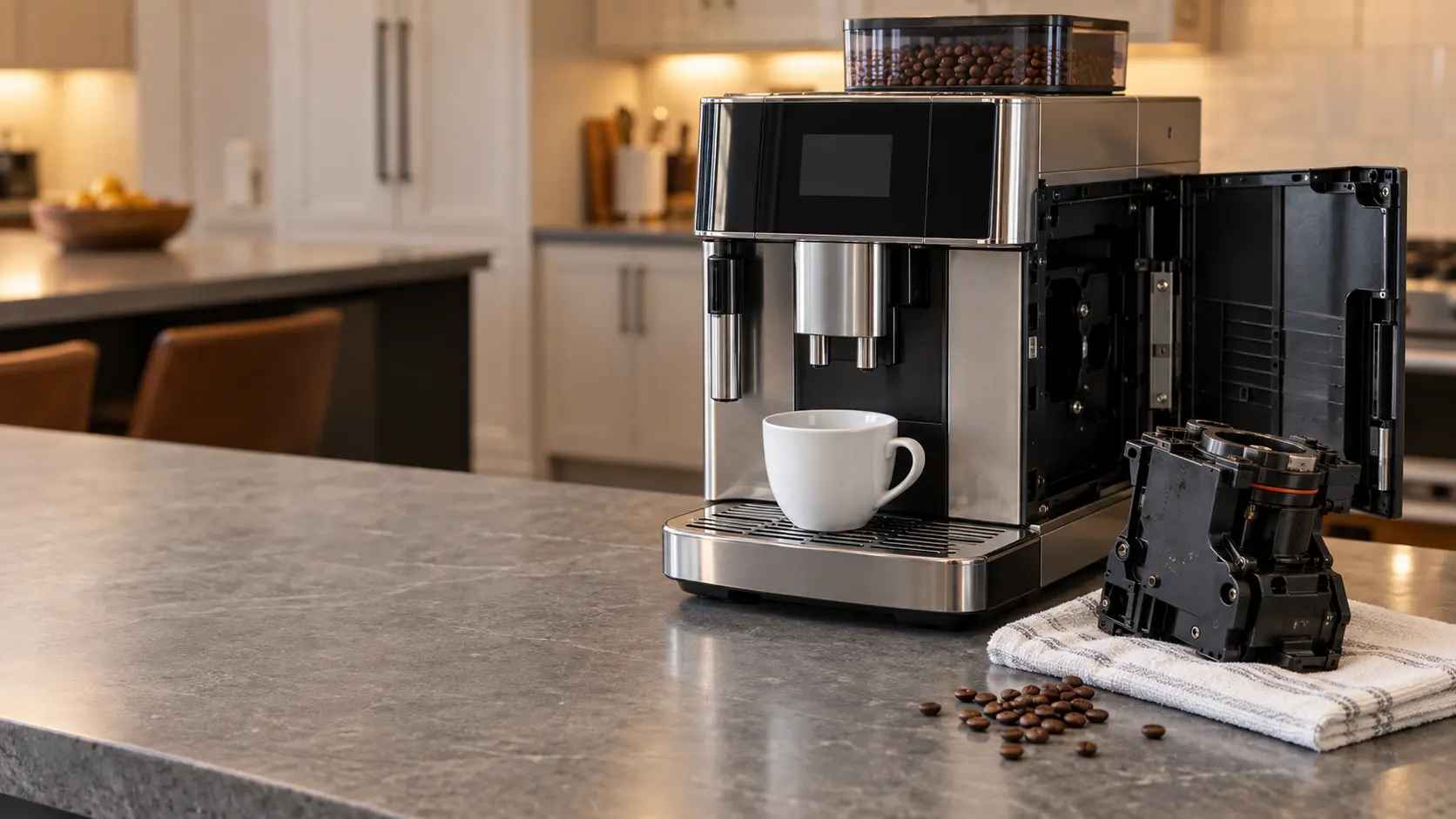
Before any estimate, run the maker's rinse, cleaning and descaling programs as the manual describes, rinse a removable brew unit, empty the grounds and fit a fresh filter. If the problem survives all of that, it is a repair question. If it disappears, the machine was never worn out.
What cleaning cannot fix
Some damage is beyond any tablet. Miele's instructions for its CVA 6405 warn that flavored ground coffee leaves sugar that sticks to and blocks the brew unit, and that its degreasing tablets will not remove that kind of deposit. The same manual says oily or caramel-coated beans will damage the machine, and it warns against green beans, which it says can damage the grinder as soon as grinding begins.
Source: Miele — Operating and Installation Instructions, CVA 6405 built-in coffee system (en-US) — The machine locks out drinks when the descaling count reaches 0; flavored ground coffee blocks the brew unit and degreasing tablets will not remove it; oily, caramelized and green beans damage the machine; Miele not liable for damage from insufficient descaling or incorrect agent; never open the casing
Parts that are normally worth repairing
The parts that fail most often in both built-in and countertop machines are made to be changed. On a machine in sound condition, replacing one of them puts it back into service for years, and most sit in the least expensive to middle bands of the repair work we do.
- Brew-unit seals and O-rings, which harden with heat and start to leak or lose pressure.
- The brew unit itself, on models where it is a single removable assembly.
- Grinder burrs, worn by years of beans or chipped by a stone in a bag.
- The pump, which grows loud and weak as it tires or struggles against scale.
- The inlet valve and hose on a plumbed coffee system.
- Milk system tubes, valves and frother parts.
- Drip tray and grounds container sensors or switches.

When replacing makes more sense
Replacement becomes the honest answer when the damage is spread through the machine rather than sitting in one part, or when the part that failed cannot be bought any more. Scale is the usual reason for the first case: a machine run for years on hard water without descaling can have deposits in the heater, the valves, the pipework and the brew unit all at once.
Makers take this seriously. Miele's instructions say the company cannot be held liable for damage caused by insufficient descaling or the wrong descaling agent, which tells you how much harm scale can do.
Signs a machine is near the end
- Several unrelated parts need changing at the same visit.
- Scale is visible in the water circuit, not only at the spout.
- The control board has failed and no replacement or approved substitute exists.
- An inexpensive countertop model needs a heater or a board, a large share of a new one.
- The housing is cracked or burned around the heater or wiring.
The board question
Control boards and displays are the parts most likely to be discontinued once a model leaves production. A photo of the model plate lets us check availability before anyone commits to a repair, which is the single fastest way to settle the decision.
Source: Miele — Operating and Installation Instructions, CVA 6405 built-in coffee system (en-US) — The machine locks out drinks when the descaling count reaches 0; flavored ground coffee blocks the brew unit and degreasing tablets will not remove it; oily, caramelized and green beans damage the machine; Miele not liable for damage from insufficient descaling or incorrect agent; never open the casing
How the type of machine tips the decision
A countertop bean-to-cup machine is the easiest to replace: unplug it, set a new one on the counter. That makes the repair threshold lower, especially on entry models. A premium countertop machine with a sound body and a single worn part is still usually worth fixing.
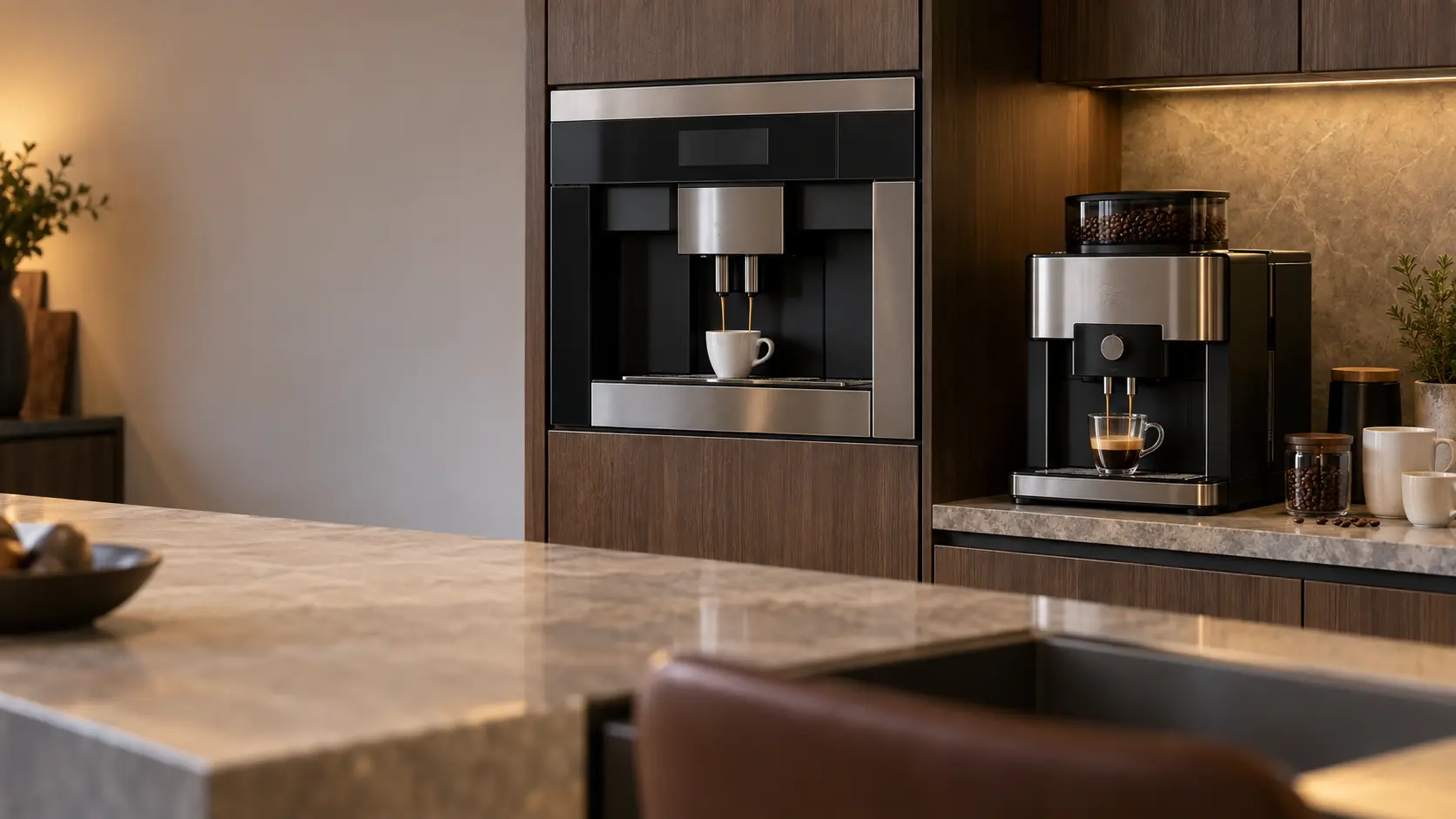
A built-in coffee system leans toward repair. The cabinet was cut to its size, the outlet and any water line sit where its drawing put them, and a trim kit may frame it in the column. A new model from another maker may need a different cutout depth or connection position, which turns a coffee machine purchase into cabinet work. A manual espresso machine sits in between: simple, rebuildable parts, but on a budget model even a boiler repair can outweigh its value.
Matching a new built-in to an old cabinet
If a built-in must go, compare the old and new installation drawings for cutout width, height and depth, ventilation gaps, the position of the power point and, on a plumbed model, where the supply connects. Measure the cabinet itself rather than trusting the old model's brochure.
What to gather before a technician comes
A fair decision starts with facts. Photograph the model plate, which usually sits behind the front door, on the frame around the drip tray or under the tank. Write down what the display says, word for word, and when the trouble began.
Note the care history as honestly as you can: when the machine was last descaled, whether a filter is fitted and how often the brew unit is cleaned. That history tells a technician more about the heater, pump and valves than any single symptom, and it keeps the first visit from turning into two.