

The two-hour line and why it applies here
Milk left in a coffee machine container is simply milk out of the refrigerator. The FDA's guidance is that perishable food left out for 2 hours or more lets bacteria multiply rapidly, and that the limit drops to 1 hour when the air is above 90°F. A kitchen in summer with the machine's own warmth beside the carton can reach that faster than people think.
Count from the moment the milk left the refrigerator, not from the last drink. A carton brought out for the first latte of the morning and left connected through a slow breakfast has often passed two hours before anyone thinks to put it away.
- Out for less than 2 hours at ordinary room temperature: back into the refrigerator.
- Out for 2 hours or more, or 1 hour on a hot day: pour it away.
- Not sure how long: pour it away and start with fresh, cold milk.
- Milk that stood inside the tubes overnight: never use it, clean the path first.
Source: FDA — Refrigerator Thermometers: Cold Facts about Food Safety — Perishable food left out 2 hours or more lets bacteria multiply rapidly; the limit is 1 hour above 90°F; keep the refrigerator at 40°F or below
Which milk containers keep milk cold
Built-in and countertop machines handle milk in different ways, and the difference decides how long a container may stay attached. Read the manual for yours rather than trusting how the container looks; a stainless jug is not necessarily a cooled one.
An uncooled flask or jug
Miele says outright that milk is not cooled in its flask and asks owners to put the flask in the refrigerator when milk is not needed for a while. Bosch describes its stainless container as meant for storing milk in the refrigerator, and its built-in reminds you when it goes into energy-saving mode with milk still attached. Treat either one as a jug that visits the counter, not one that lives there.
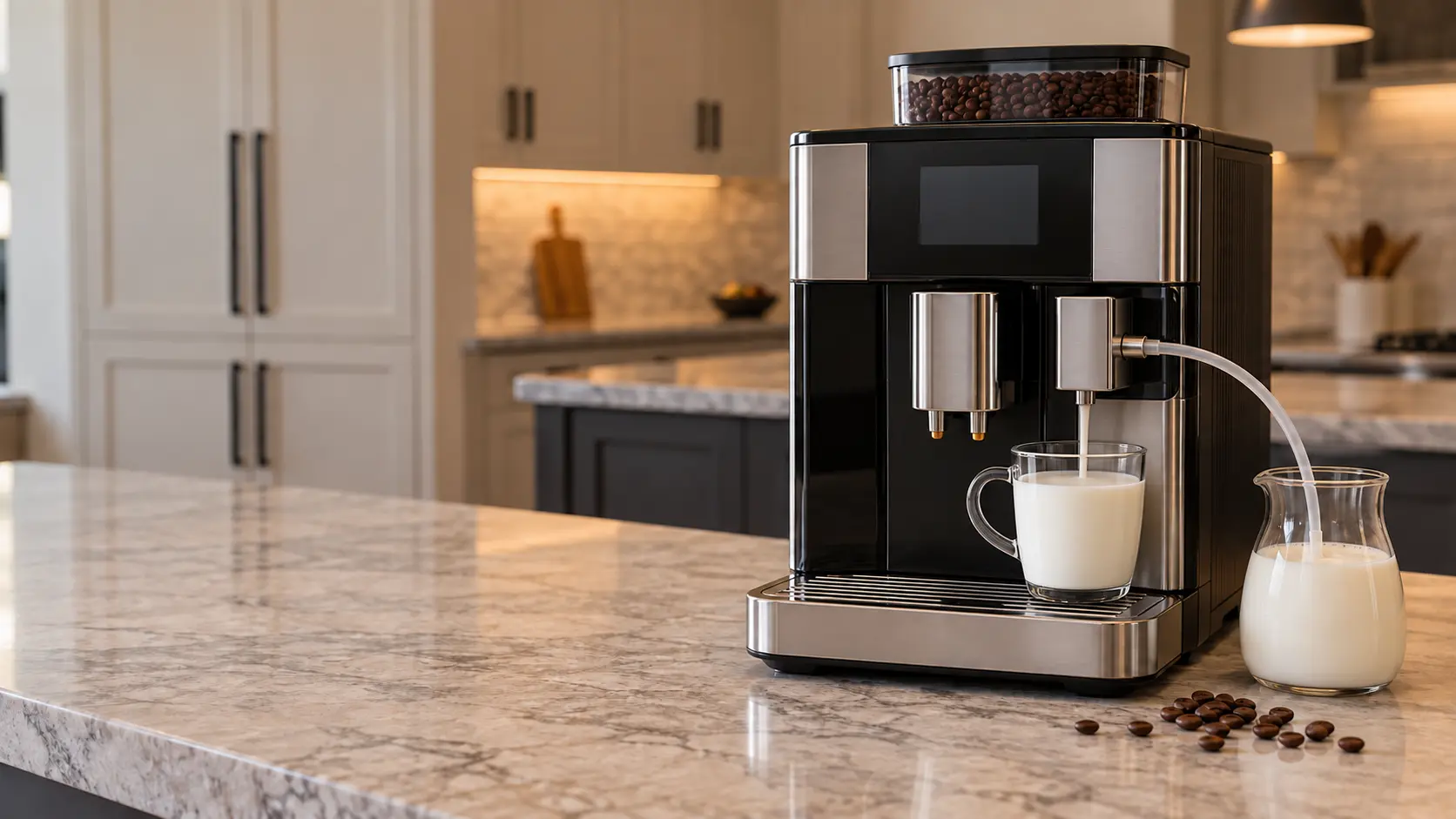
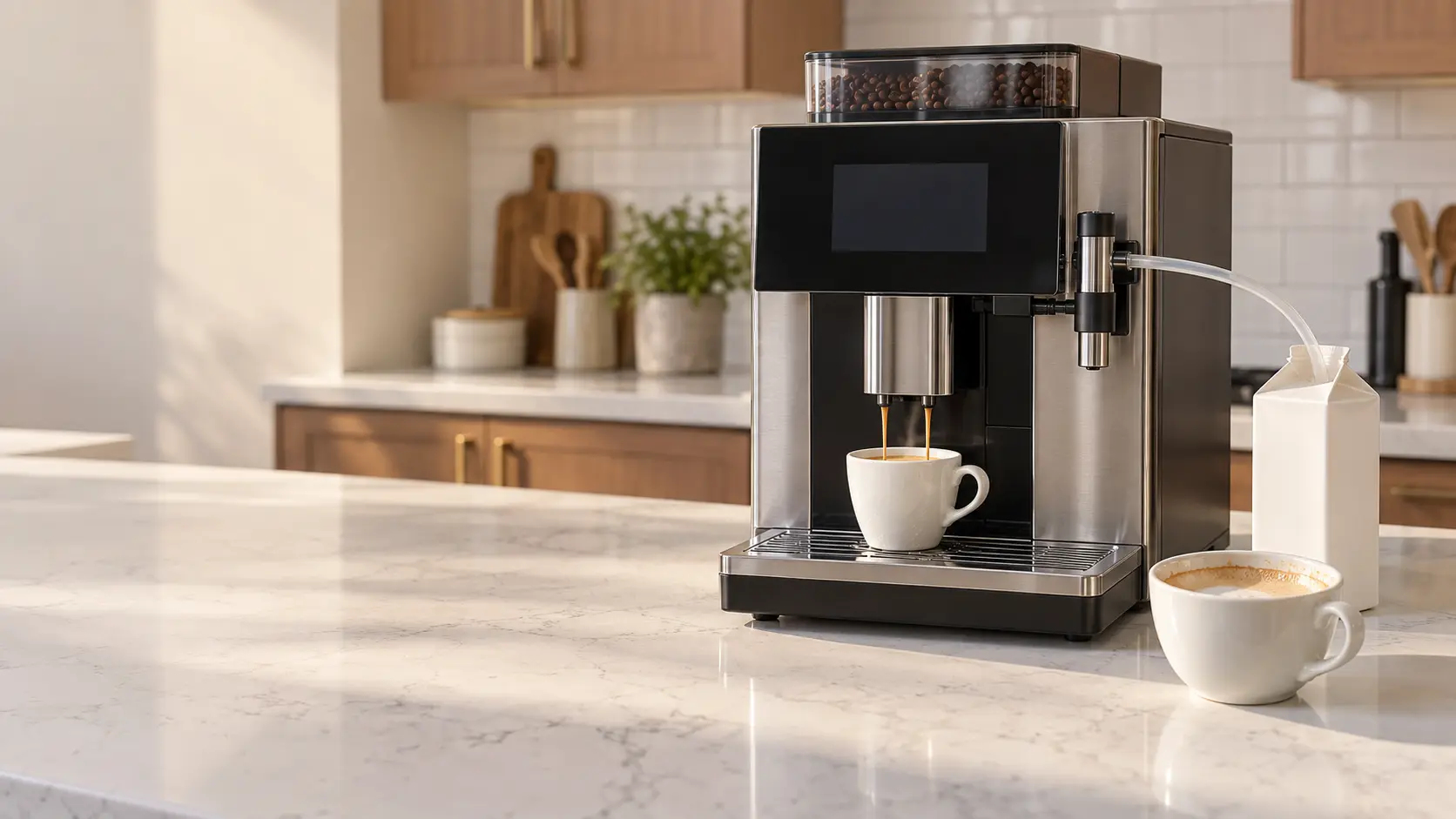
A tube dipped into a carton
Many countertop machines let the milk tube go straight into the carton. It is convenient and it is the arrangement most often forgotten, because nothing on the machine shows that a carton is still standing there. JURA recommends a milk cooler or a vacuum container, partly for hygiene and partly because its frother works best with milk at 39 to 46°F.
Machines with a cooled compartment
If your machine has a chilled milk compartment, or you pair it with a separate milk cooler that holds 40°F or below, the milk can stay attached longer. The cleaning does not change: milk dried inside the tubes and the frother still has to be removed every day.

What stays inside after the last milk drink
The container is only half the story. Every milk drink leaves a film in the intake tube, the frother and the spout, and the heat and moisture around them are ideal for it to spoil. Miele's cleaning chapter cautions that heat and moisture inside the machine can turn leftover milk bad enough to threaten health, and Bosch cautions that dried milk is hard to remove once it sets.
Most machines run a short rinse through the milk path after each milk drink, some with water and some with a jet of steam. That rinse removes the loose milk; it does not replace taking the parts apart.
Signs that milk has been sitting in the path
A sour smell at the spout, flecks in the first foam, a thin or collapsing froth and a tube that looks cloudy inside all point to old milk in the system. None of these should be tasted to confirm; clean the parts and run the machine's milk-cleaning program before the next drink.
Source: Miele — CVA 6405 built-in coffee system, operating and installation instructions — Milk is not cooled in the milk flask; milk residues inside the machine can go off and pose a health risk; clean the milk flask daily; use plain milk, pasteurized if dairy; Bosch — BCM8450UC built-in coffee machine, use and care manual — The milk container is intended for storing milk in the refrigerator; clean it after each use because milk residue can spoil; dried milk residues are difficult to remove
A daily and weekly routine for the milk path
Miele puts the milk flask and its lid on the list of parts to clean daily, at the end of the day. Bosch asks for the milk container to be cleaned after each use because milk residue spoils, and JURA's daily routine includes rinsing and dismantling its frother whenever milk went through it.
The weekly and seasonal jobs are about wear. JURA recommends replacing the milk pipe and the interchangeable milk spout roughly every three months for hygiene; tubes that stay cloudy after cleaning or have turned stiff should be replaced sooner.
- After the last milk drink: let the automatic rinse run and put the milk away.
- Every evening: take the frother and tubes apart and rinse them in warm water.
- At the interval the machine asks for: run the milk-cleaning program with the maker's cleaner.
- About every three months: new milk tubes and spout if the maker recommends it.
Source: Miele — CVA 6405 built-in coffee system, operating and installation instructions — Milk is not cooled in the milk flask; milk residues inside the machine can go off and pose a health risk; clean the milk flask daily; use plain milk, pasteurized if dairy; Bosch — BCM8450UC built-in coffee machine, use and care manual — The milk container is intended for storing milk in the refrigerator; clean it after each use because milk residue can spoil; dried milk residues are difficult to remove; JURA — E8 instructions for use — Milk at 39–46°F froths best, use a milk cooler or vacuum container; clean the frother daily when milk is used; replace the milk pipe and spout about every 3 months
Which milk to put in the machine
Miele asks that only plain milk be used, because most sugary additives clog the milk lines, and that dairy milk be pasteurized. Flavored or sweetened creamers leave a sticky layer that ordinary cleaning struggles to lift.
Plant milks vary by brand in how well they foam, but the hygiene rules are the same for them: refrigerated between drinks, out no more than two hours, and a clean path before the next carton.
Source: Miele — CVA 6405 built-in coffee system, operating and installation instructions — Milk is not cooled in the milk flask; milk residues inside the machine can go off and pose a health risk; clean the milk flask daily; use plain milk, pasteurized if dairy