
The first minutes: find the water, then find the power
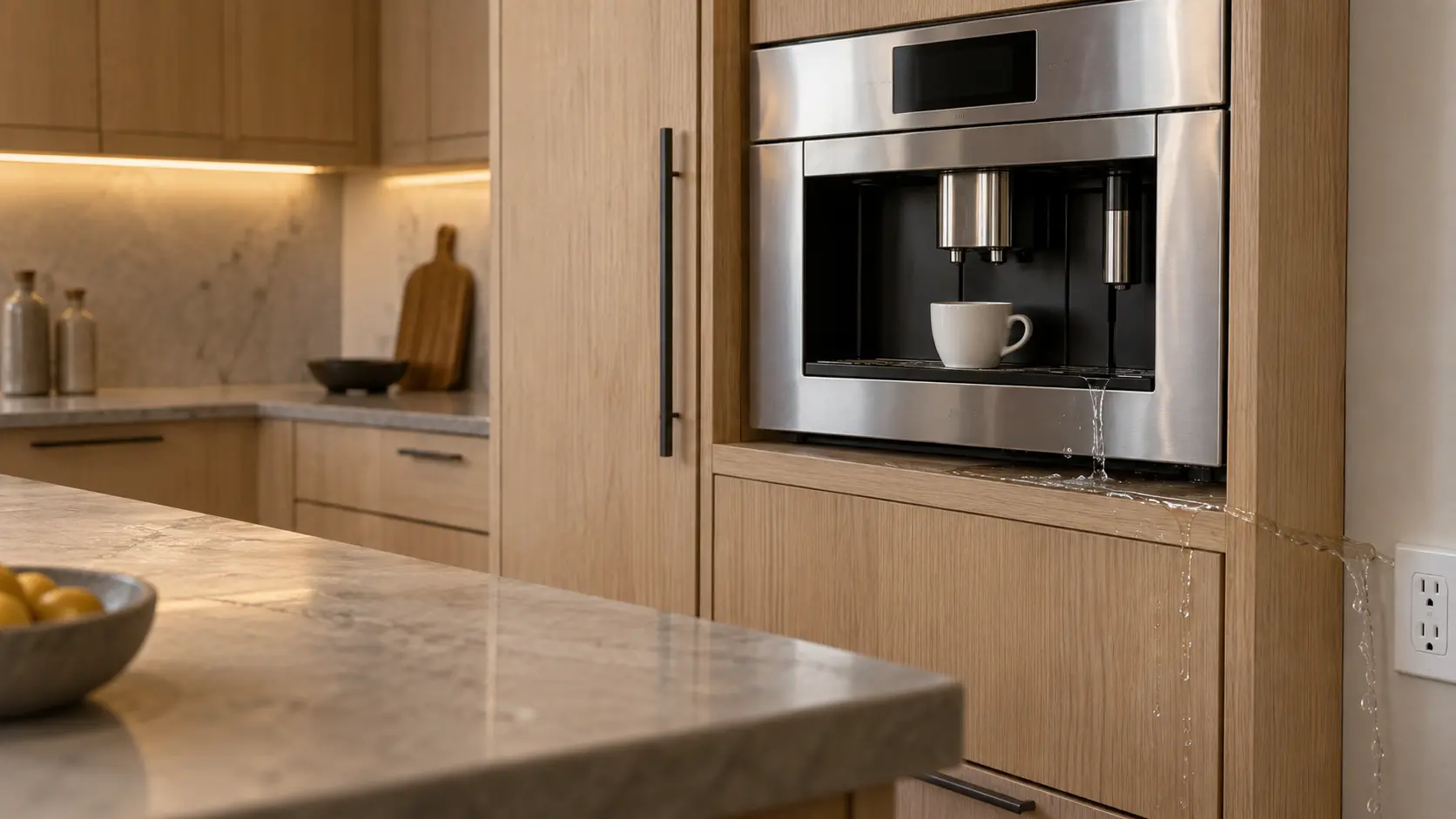
Before wiping anything, look at where the water has traveled. On a built-in coffee system the plug usually sits in the cabinet behind or beside the machine, out of sight, and a trickle that runs down the back panel can reach it long before anyone notices a drop on the shelf. On a countertop machine the outlet is often a hand's width from the drip tray.
If the water has reached a plug, a power strip or a wall outlet, nobody touches the machine, the cord or the wet counter. Go to the electrical panel, stand on a dry floor and turn off the breaker serving the kitchen outlets. Only then does anyone pick up a towel.
- Water near an outlet or plug: breaker off first, from a dry spot.
- Water only on the shelf or the tray: switch the machine off at its own button.
- A plumbed machine still filling: close its shutoff valve before anything else.
- Children and pets out of the kitchen until the floor is dry.
When the water has reached an outlet
Wet electrical parts stay dangerous while the circuit is live, and a breaker that has not tripped proves nothing. The Miele and Bosch manuals both describe disconnecting the machine at the supply before any cleaning or maintenance; with water on the outlet, the breaker is the only safe way to do that.
When the machine is plumbed in
A plumbed coffee system refills its tank from the house line whenever it is on, so a leak can keep feeding itself. The installer should have fitted a shutoff valve between the machine's hose and the supply, usually in the base cabinet or behind a panel in the tall unit. Turn it clockwise until it stops; if you do not know where it is, the valve under the kitchen sink or the house main will do while you wait.
Where water in a coffee cabinet usually comes from
Once the power and the water are off, a coffee machine leaking water can usually be traced by looking, without a tool and without moving the machine. Open the front, lift out the removable parts one at a time and note which one is wet underneath.
The pattern of the wet patch is a clue in itself. A puddle at the front edge points to the tray or the spouts, a wet back corner to the tank seat or the hose, and droplets on the cabinet ceiling to steam that had nowhere to go.
A water tank that is not fully seated
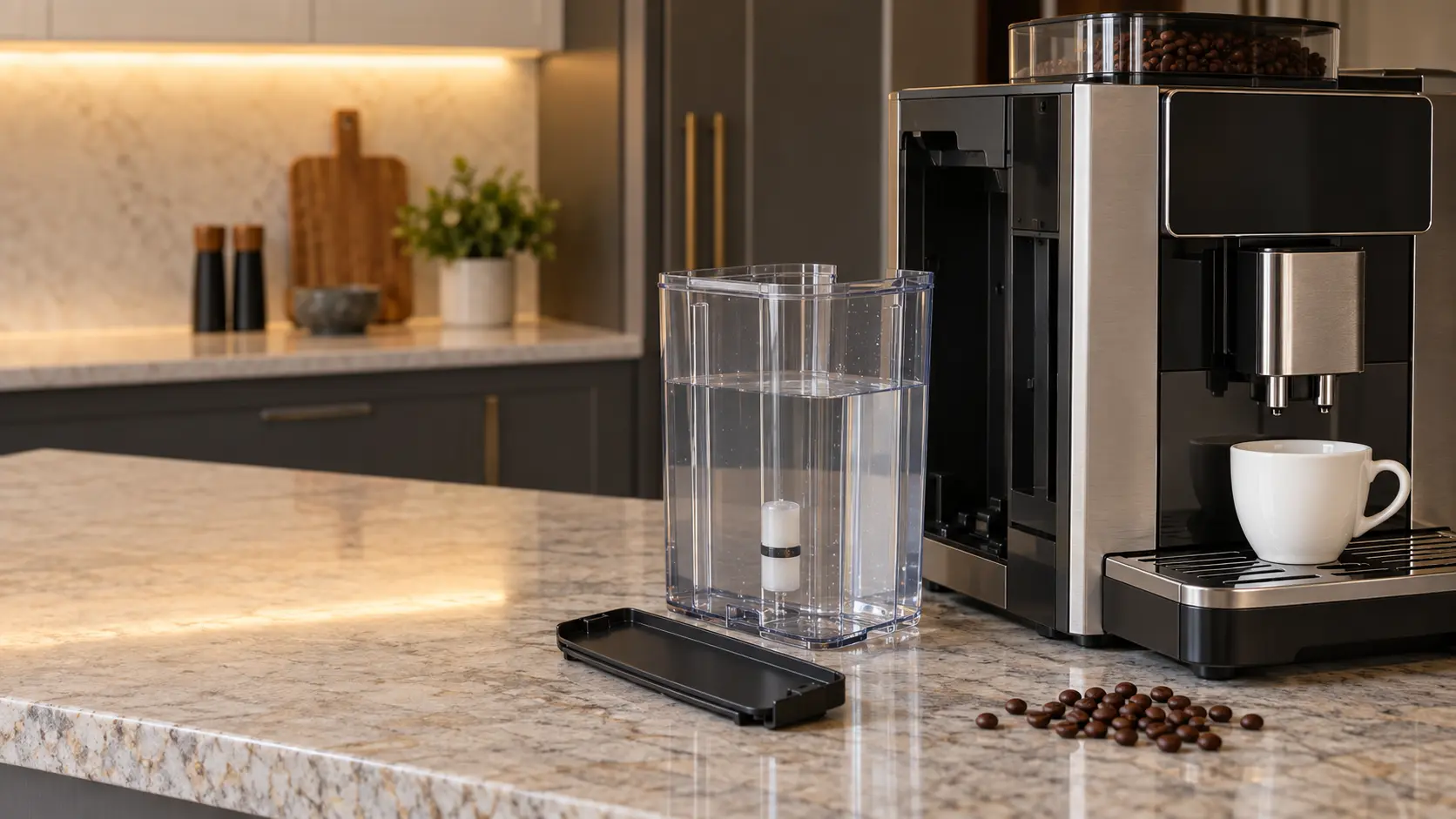
The tank connects through a small valve in its base. Miele warns that if the tank sits slightly high or protrudes, the valve will not connect properly and can leak, and that a dirty seating surface is the usual reason. Wipe the surface, push the tank back until it clicks and watch the next cup.
An overfull drip tray
Every rinse cycle at switch-on and switch-off sends water into the tray. A tray emptied every few days instead of daily can overflow onto the shelf, and a tray pushed in crooked lets water run behind it rather than into it.
Condensation behind a closed cabinet door
Heating water makes steam, and steam condenses on cold wood. Miele allows a built-in behind a cabinet door only if the door stays open while the machine runs and is closed only after it has cooled completely; otherwise condensation can damage the machine and the cabinet. Blocked ventilation openings above or below the unit cause the same wet shelves.
The supply hose on a plumbed machine
Miele notes that the protective sleeve of the intake hose must not be damaged or kinked, or it will leak. A hose crushed when the machine was pushed into its niche may hold for months and then seep, and that seep is out of sight behind the machine.
Leaks from a countertop or manual espresso machine
A countertop bean-to-cup machine leaks for the same everyday reasons: a tank lifted out and set back at an angle, a full tray or grounds container, a cup that overflowed during a double shot. Slide the machine forward on the counter only after it is switched off and unplugged at a dry outlet, and look at the feet and the base for the wettest spot.
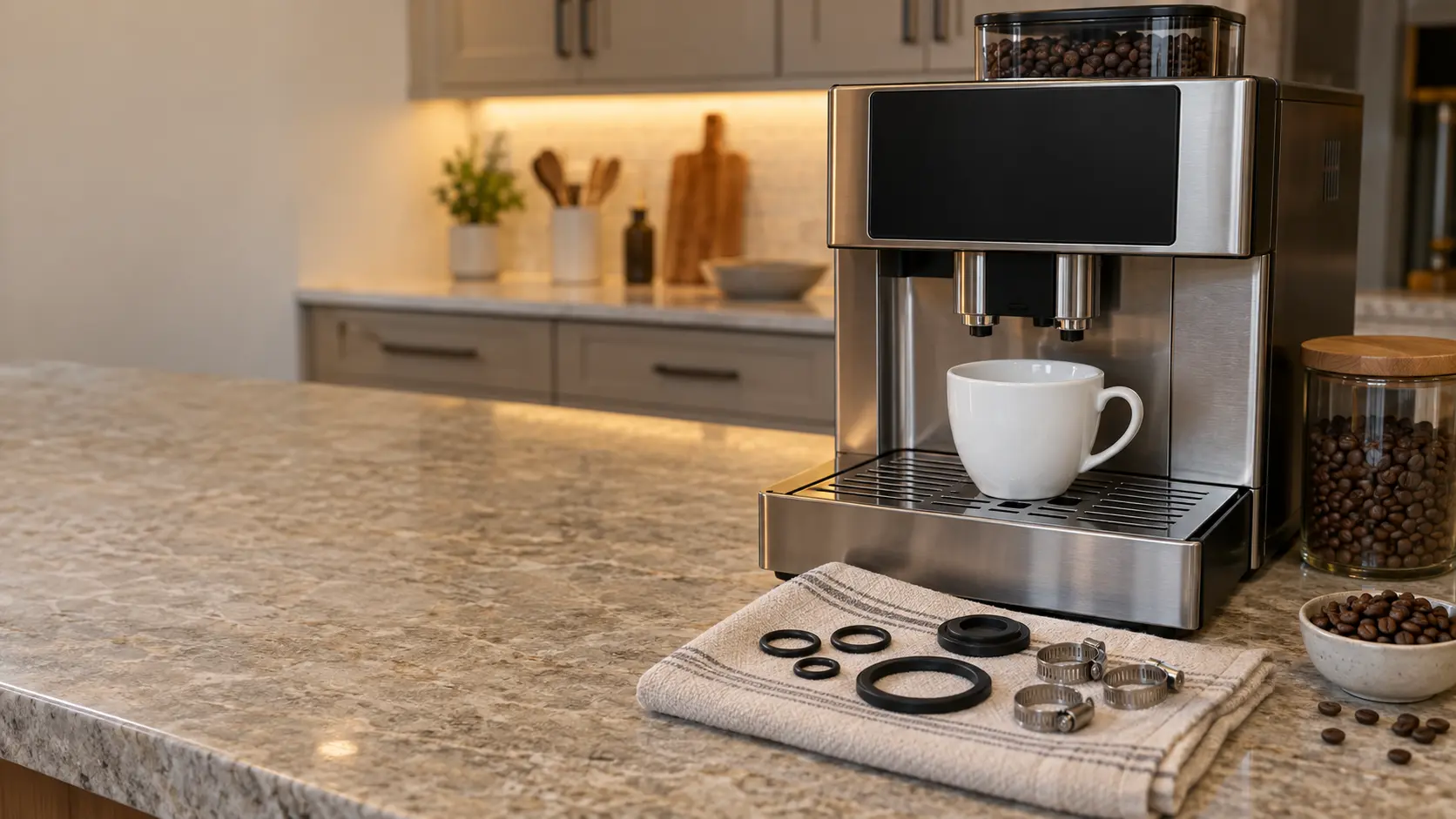
On a manual espresso machine the group head and the steam wand are the usual places. Water around the group after each shot often means the portafilter gasket no longer seals, which is a wearing part rather than an emergency; water pooling under the body with the machine idle is not, and it should stay switched off.
Drying the cabinet and judging the damage
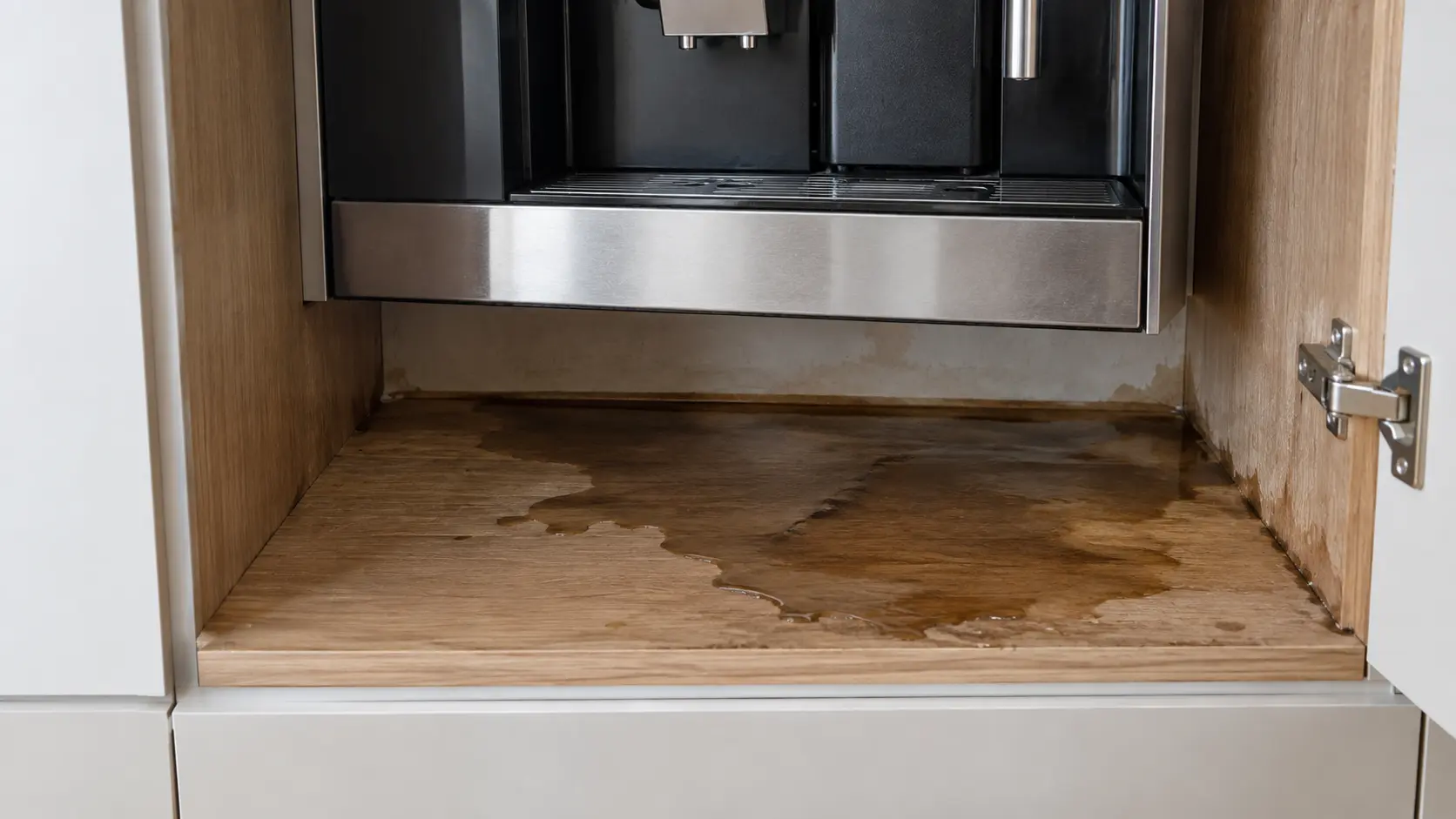
Particleboard shelves swell and lose their grip on screws when they stay wet. Soak up standing water at once, leave the front of the machine and the cabinet door open, and let air move through the space for a day before the machine runs again.
Look at the edges, not only the surface. A shelf edge that has puffed, a laminate that lifts or a black ring under the tank area all tell you water has been reaching the cabinet for longer than one morning.
- Soak up water with towels; do not use a heater or a hair dryer near the machine.
- Leave the machine switched off and its breaker off while the cabinet dries.
- Photograph the wet area and the model plate before the evidence dries.
- Check the floor below the tall cabinet for water that ran down inside the side panels.
Leak protection and the week you are away
Some plumbed built-ins carry a leak-protection system. Miele's Waterproof System protects against water damage only if the machine is correctly installed and connected, any problem is repaired at once, and the water supply is shut off during long absences such as a vacation. It is a safeguard, not a reason to leave a known drip alone.
Closing the house main before a trip is not the whole answer either: Miele wants the supply to each appliance closed at its own valve. For a plumbed coffee system that means its shutoff valve, which is one more reason to make sure you can reach it.
Source: Miele — CVA 6405 built-in coffee system, operating and installation instructions — Disconnect from power before cleaning; shutoff valve between hose and supply must stay accessible; a tank sitting high will not connect and can leak; use behind a cabinet door only with the door open; a damaged or kinked hose sleeve leaks; Waterproof System conditions and shutting each appliance's supply for a vacation