
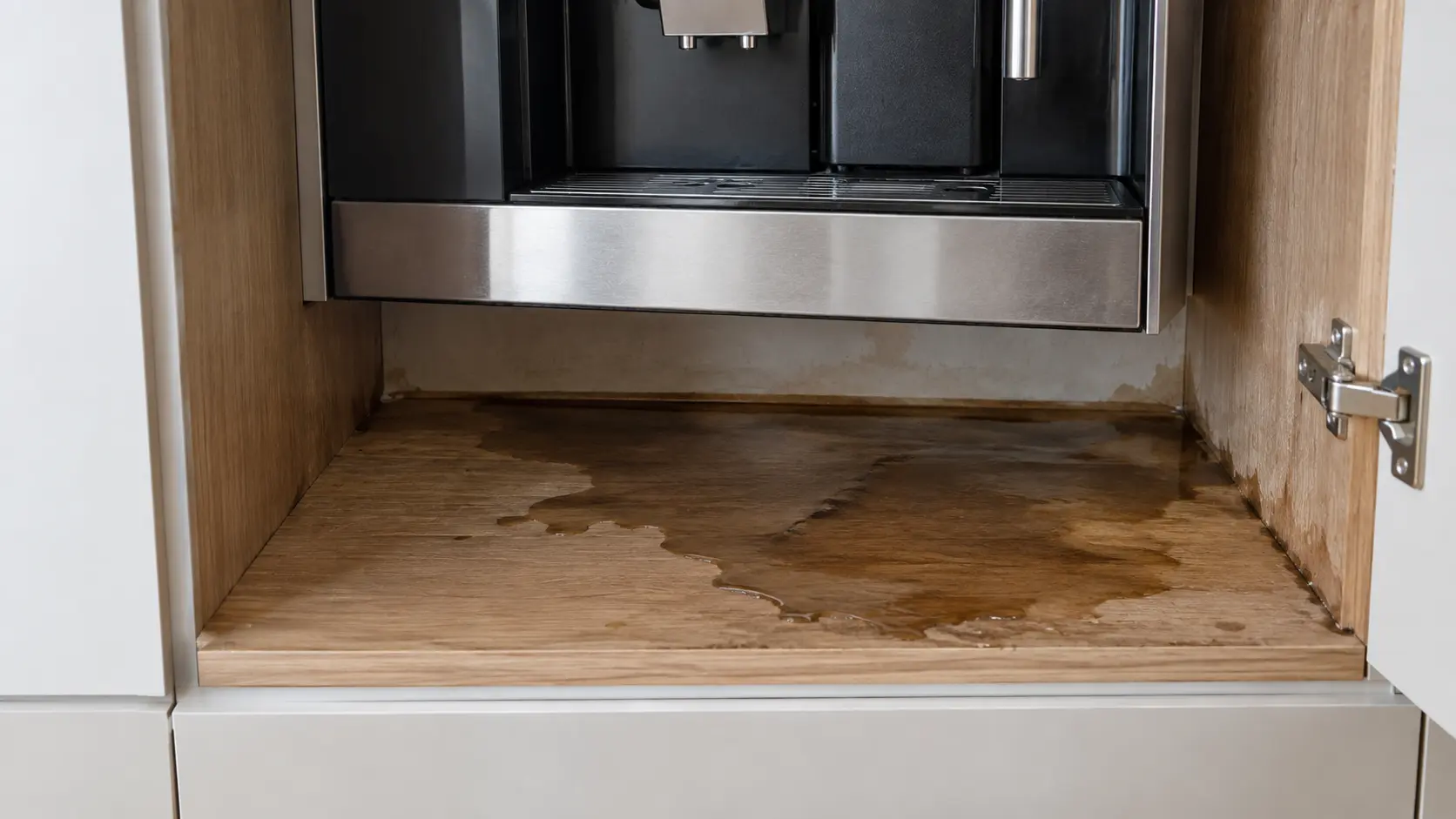

Keeping people, the cabinet and the cup safe
Water, heat and hygiene
guides.
What to do when water spreads from the machine toward an outlet or into the cabinet, when steam or scalding water sprays where it should not, when something smells hot, and how to keep milk and old grounds from spoiling inside it.
Mon–Sat, 8am–8pm
- Three guides
- Read before you book
- Says where to stop
Book a visit
Three short steps, about a minute.
or call (844) 551-4777
Loading appointment form…
The appointment form couldn’t load. Please try again.
Water, heat and hygiene,
guide by guide.
A coffee machine combines three things that deserve respect in any kitchen: mains power, water heated past the point of scalding, and milk that spoils within hours at room temperature. Most mornings none of that matters. This section is for the mornings when it does, and for the everyday habits that keep those mornings rare.
All 18 guides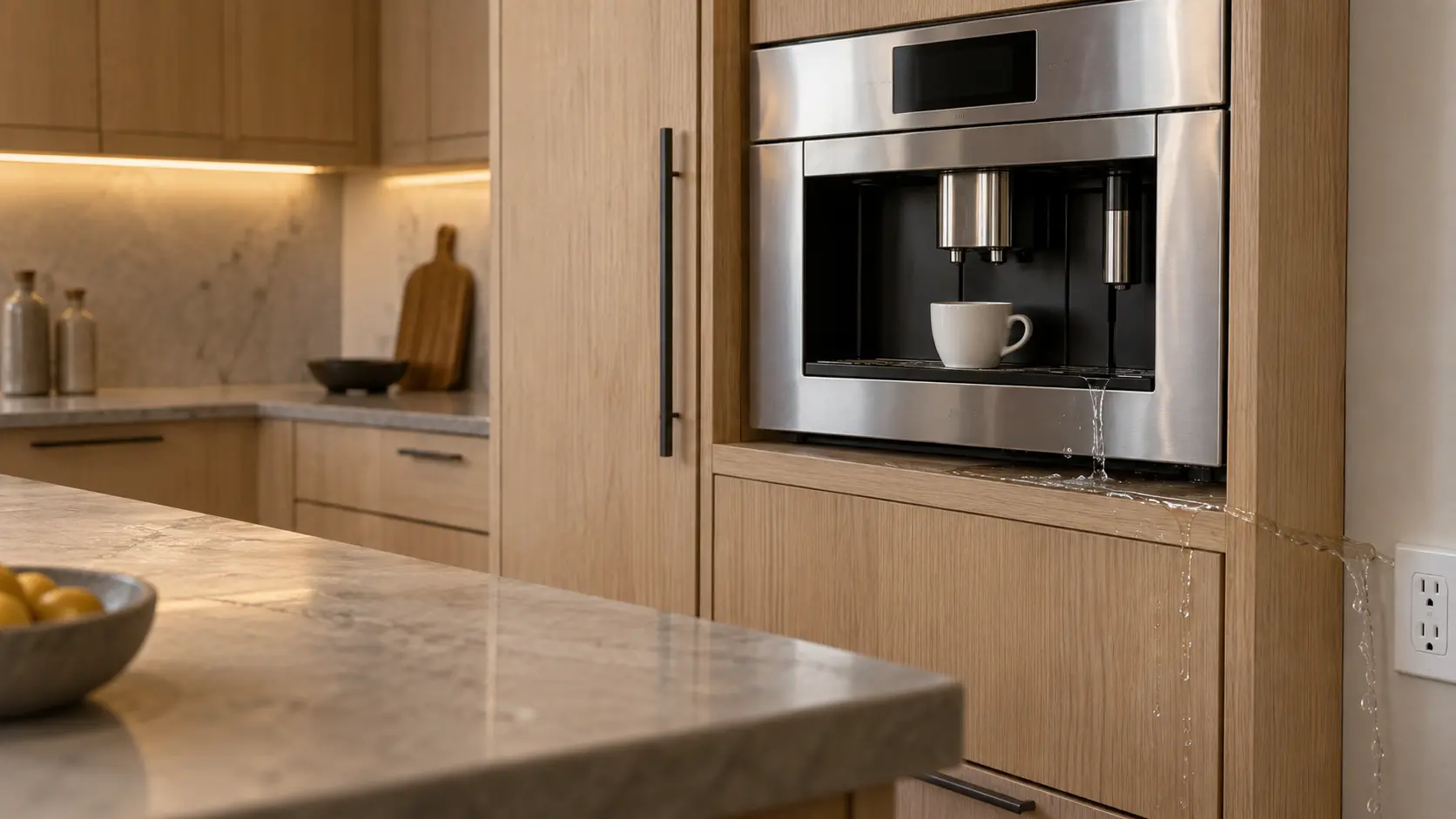

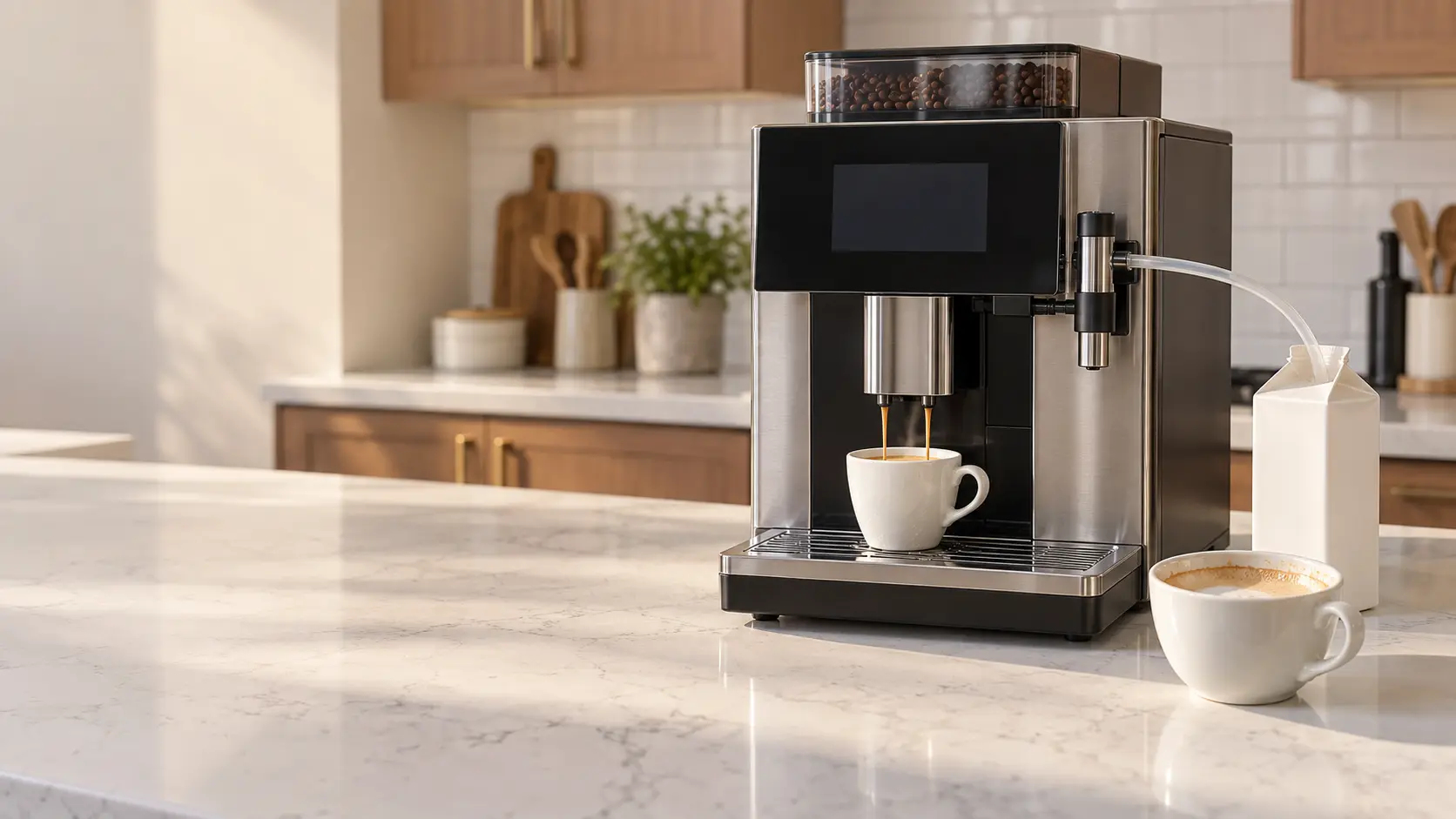
Keeping people, the cabinet and the cup safe.
The guides here cover water escaping from the machine into its cabinet or toward an outlet, steam and hot water spraying from the spouts or the frother, and milk left standing in a container or inside the tubes. Each one starts with the order of steps for the first minutes, written to be followed by someone who has just walked into the kitchen and seen the problem.
The order is always people first, then power and water, then the machine. That means stepping back from steam, switching off the breaker from a dry spot when water reaches an outlet, closing the shutoff valve on a plumbed unit and pouring away milk that has been out too long. Nobody opens the housing, pulls a built-in out of its cabinet or reaches past a hot brew-unit door; those are where a technician takes over.
The food-safety figures come from the FDA, and the machine warnings from the makers' own manuals for built-in and countertop models. Each source is printed beneath the passage it supports, so you can check the wording for yourself.
Not sure where to start?The short answerWater Leaking From a Coffee Machine Into Its Cabinet: Power, Shutoff, Then the Source
A coffee machine leaking water into its cabinet is first a safety question: stay out of any water that reaches an outlet, switch the breaker off from a dry spot and close the shutoff on a plumbed unit.
The short answerSteam and Scalding Water From a Coffee Machine: Step Back, Switch Off, Let It Cool
A coffee machine spraying steam or scalding water is handled in one order: step back, switch it off at its button or, if you cannot reach that safely, at the breaker, and let it cool before anyone touches the spout.
The short answerMilk Left Standing in a Coffee Machine: The Two-Hour Rule and a Clean Milk Path
Milk left in a coffee machine is perishable food at room temperature: the FDA says perishables left out for 2 hours or more, or 1 hour above 90°F, let bacteria multiply.
When reading
is not enough.
If the checks in these guides did not settle it, the visit picks up from there, stop by stop.
What repairs cost- 01A test cup, step by step
- 02The price, then the part
- 03Common parts on the van
- 04Pouring before we leave
The problems
these answer.
Each has a page of its own, with the causes in the order worth checking.
All 17 problems
Coffee Machine Leaking Water Onto the Counter or Into the Cabinet
6 causes, cheapest first

Coffee Machine Drip Tray Filling Up Too Fast
6 causes, cheapest first
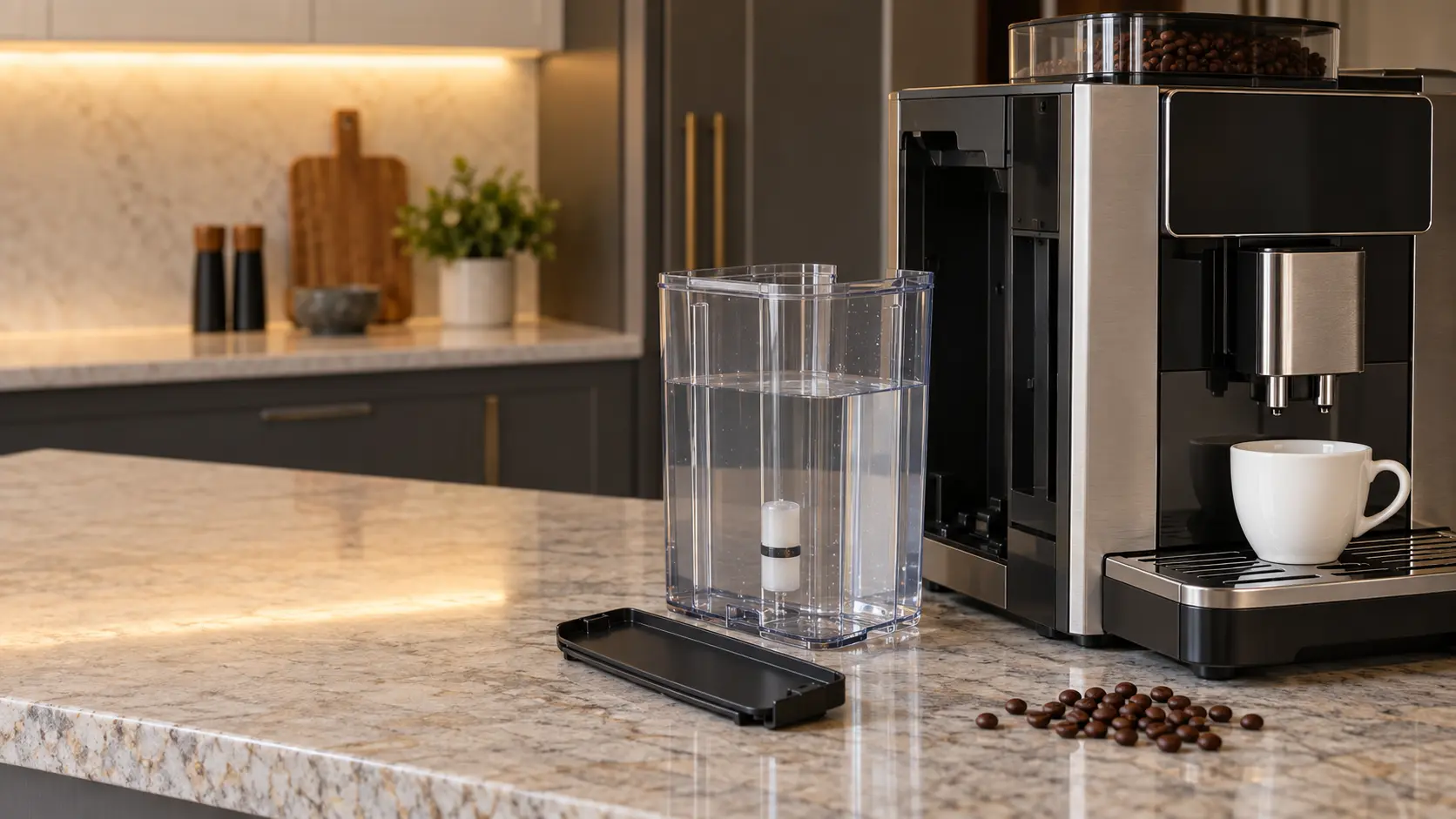
Coffee Machine Not Detecting the Water Tank
6 causes, cheapest first

Coffee Machine Tripping the Breaker or the GFCI Outlet
6 causes, cheapest first

Questions about
water, heat and hygiene.
Water is running from the coffee machine toward an outlet. What comes first?
The coffee machine is spraying steam. Should I try to stop it by hand?
How long can milk stay beside the coffee machine?
There is a hot or burning smell from the coffee machine. What should I do?
The other
sections.
Split by what you are trying to find out rather than by which part of the appliance it concerns.
All guides


Back to your everyday
Let’s get your coffee machine working again.
Three short steps online, or one call. Tell us what you are seeing and pick a window that works.