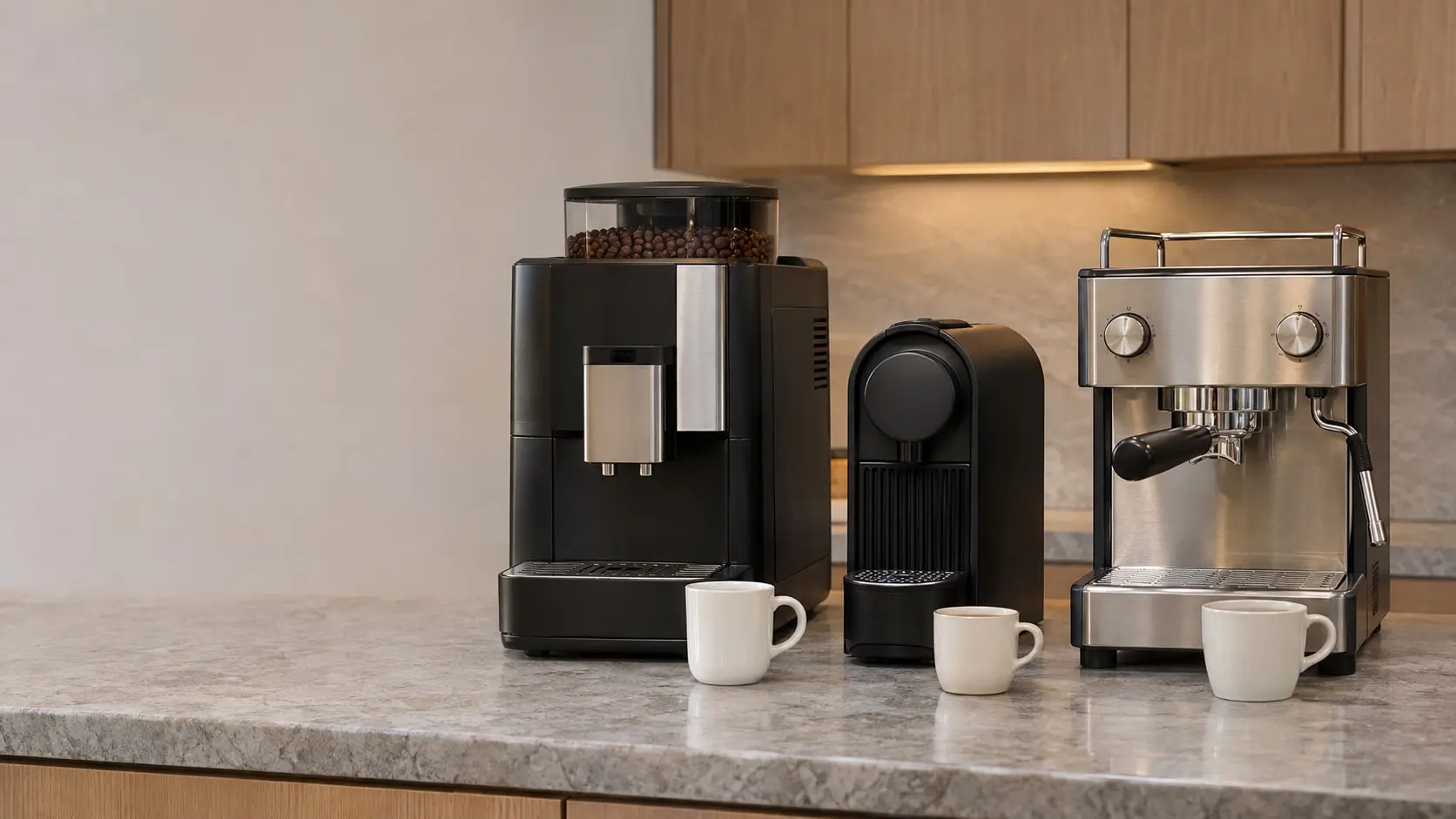

How do bean-to-cup, pod and manual machines differ?
A bean-to-cup grinds, tamps and brews on its own, a pod machine pierces a sealed capsule and pushes water through it, and a manual espresso machine leaves grinding, dosing, tamping and timing to you. The three trade effort for control, and cleaning for convenience.
Table: The three kinds at a glance
| Bean-to-cup | Pod or capsule | Manual espresso | |
|---|---|---|---|
| Effort per cup | A button | A button and a capsule | Grind, dose, tamp, brew |
| Cleaning | Daily rinse, weekly brew unit, milk system | Empty capsule bin, descale | Wipe, backflush, descale |
| Control over taste | Moderate | Limited to capsule choice | High |
| Cost per cup | Low, with beans | Highest | Low, with beans |
| Most likely repair | Grinder, brew unit, pump | Pump, heater, piercing needle | Gaskets, pump, valve |
Which one takes the least effort?
A pod machine, since there is no grinding, no grounds to empty and almost no cleaning beyond the drip tray and the occasional descale. A bean-to-cup comes second and does the most for you per drink, but expects you to keep up the rinsing and the brew unit routine. A manual machine takes the most time at the counter.
What does a bean-to-cup ask of you?
Fill the beans and water, empty the drip tray and grounds container, rinse the milk path after each milk drink, and clean the brew unit weekly. The cleaning the brew unit guide shows the weekly job.
What does a pod machine ask of you?
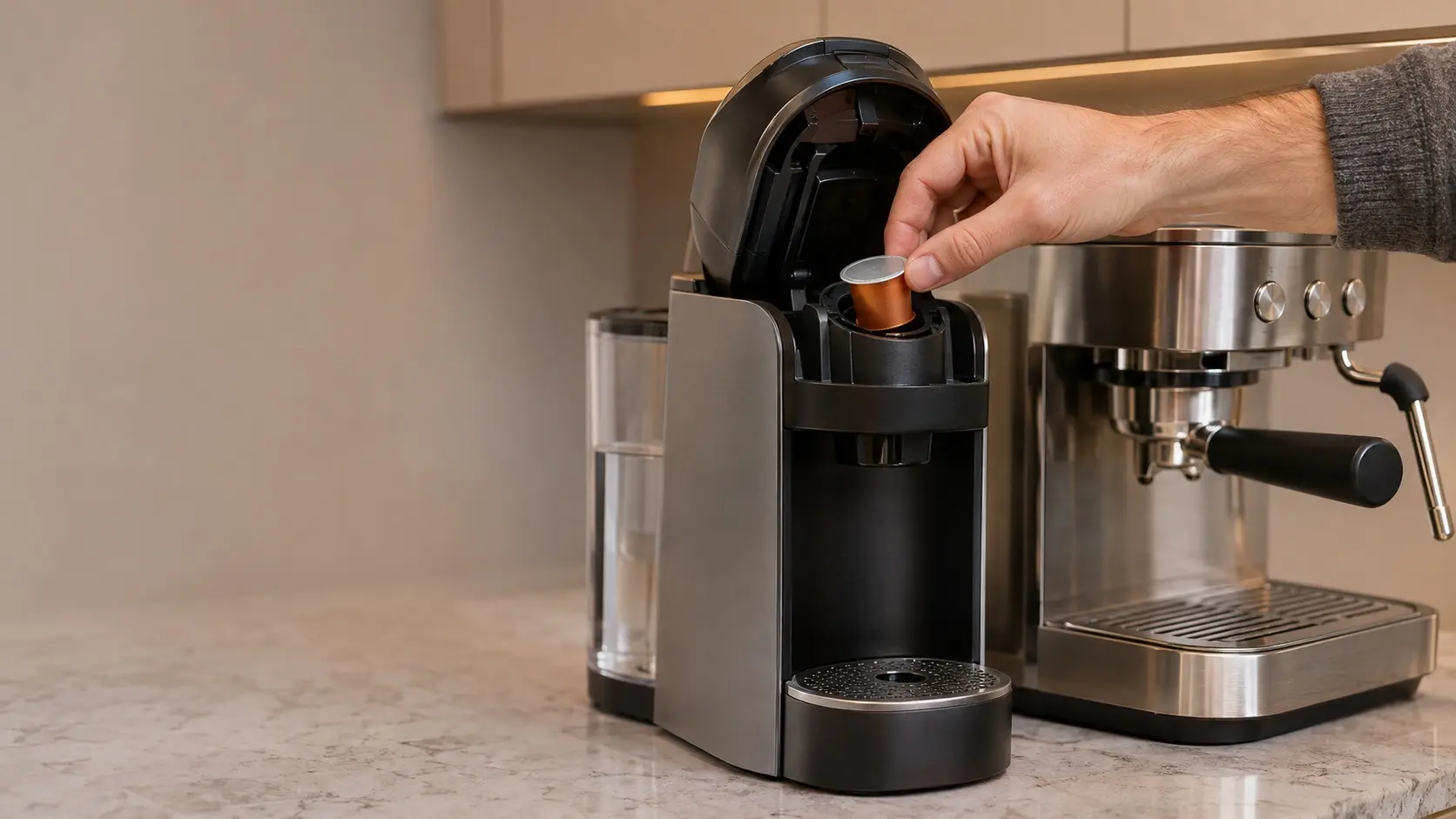
Empty the used pod bin, change the water and descale on schedule. The simplicity is the point, and the price shows up in the cost of each cup and in the waste.
What does a manual machine ask of you?
A good grinder, a dose you can repeat, a steady tamp and a habit of backflushing. In return you get a cup that responds to every change you make. It is a hobby as much as an appliance.
What usually fails on each kind?
Each design has its own weak spot, and knowing it before you buy sets your expectations. These are patterns, not promises, and they vary by use and water.
- Bean-to-cup: scale in the heater and pump, a worn grinder or a brew unit that sticks, and milk path buildup.
- Pod: a weak pump, a clogged piercing needle, and scale in a narrow water path.
- Manual: gaskets and seals that harden, a pump that strains, and a valve that drips.
Hard water speeds up most of these. If your water is hard, the hard water and filter guide explains what to do before you pick any machine.
Which kind is easiest to repair?
A manual machine is usually the simplest to service, because its parts are exposed and few. A bean-to-cup has more parts but most are replaceable modules: grinder, brew unit, pump, valve, board. Pod machines are often built as sealed, low-cost units, so a repair frequently costs close to a new one.
That changes the math. For a bean-to-cup, a repair such as brew unit repair usually makes sense on a machine in good shape. For a basic pod machine, replacing may be wiser. Repair or replace a coffee machine walks through that decision, and a diagnostic visit tells you what is actually wrong before you decide.
For a manual or lever machine, the manual espresso machine type page lists the usual jobs.
How should you decide?
Start with the morning you actually have. If you want a good cup in under a minute with no thought, choose a pod. If you drink milk drinks daily and want variety from one button, a bean-to-cup suits. If you enjoy the process and want to learn, choose manual.
What about space and the kitchen?
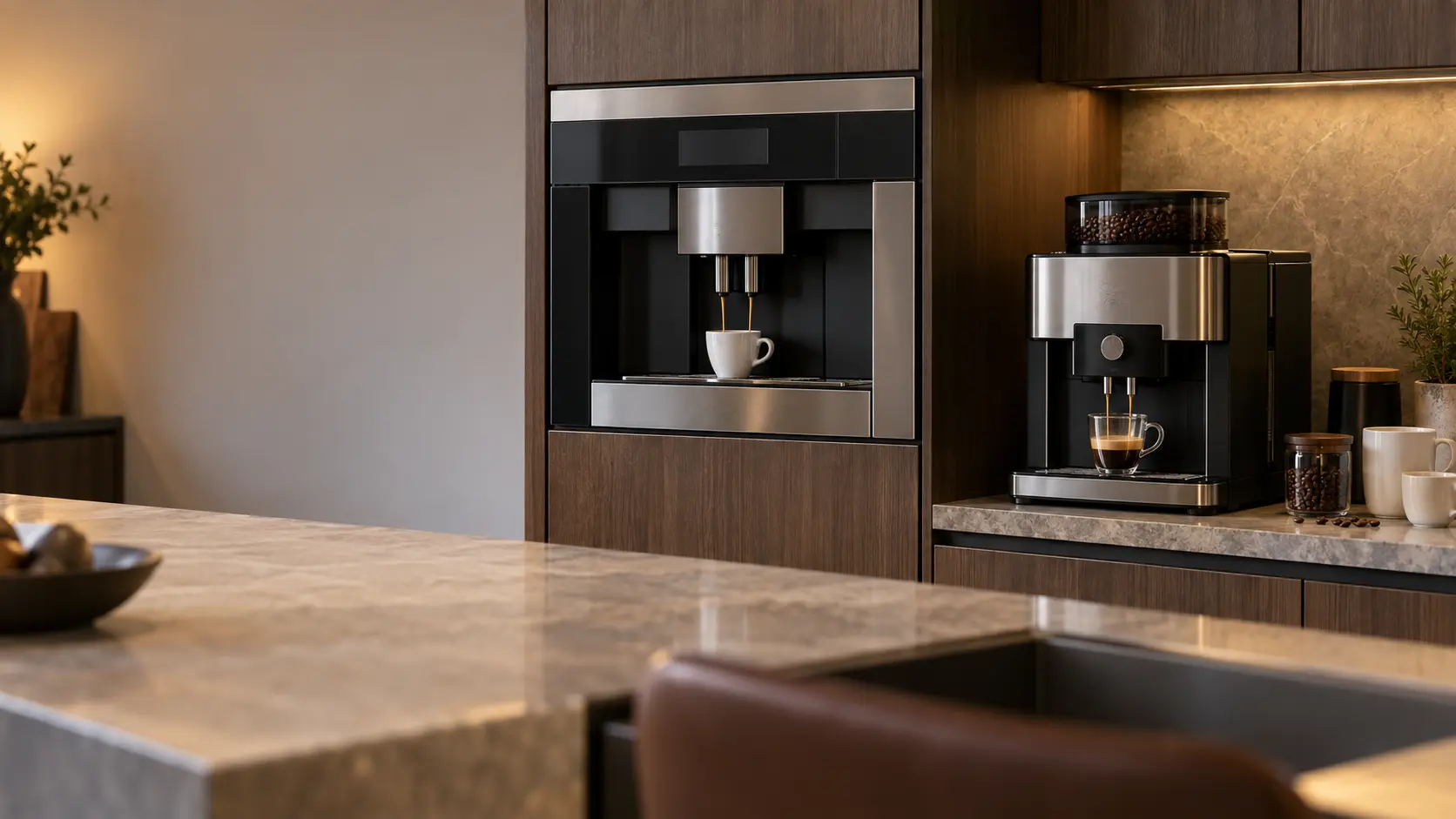
A bean-to-cup is usually the tallest and heaviest of the three and needs room to lift the hopper lid and pull the water tank. Measure under your cabinets first, and see built-in or countertop if you are thinking about a cutout. Pods and manual machines are smaller.
What if you hate cleaning?
Choose the pod, or a bean-to-cup with an automatic rinse and a milk path you will really clean. Skipping the routine is what makes bean-to-cup machines fail early.
What does each one cost to run?
Running cost is where the three part ways most clearly, even before any repair. Beans usually cost less per cup than capsules, so the more cups a household drinks, the sooner a bean-to-cup's higher purchase price is offset; a one-cup-a-day drinker may never get there.
- Bean-to-cup: beans, a descaler, a water filter cartridge and tablets for the brew unit.
- Pod: capsules, which are the largest cost, plus descaler.
- Manual: beans, descaler, a backflush cleaner and replacement gaskets now and then.
Add the time cost too. A machine you avoid cleaning is a machine that fails early, so be honest about the routine you will keep. If milk drinks are the main use, count the milk system's daily rinse as part of the price. The milk system care guide shows what that looks like.
What should you check before you buy?
A short list prevents most regret, and every item takes a minute in the store or on the product page.
- Can you remove the brew unit yourself for rinsing, or is it fixed?
- Is the water tank easy to lift and clean, and is there a filter cartridge option?
- Does the milk system have parts you can take apart and wash?
- Is there an automatic rinse at start-up and shutdown?
- Does the counter and cabinet height fit, including the lid?
A machine you can clean is a machine that lasts, so weigh these ahead of the number of drink buttons.


