
What does a break room need for an office coffee machine?
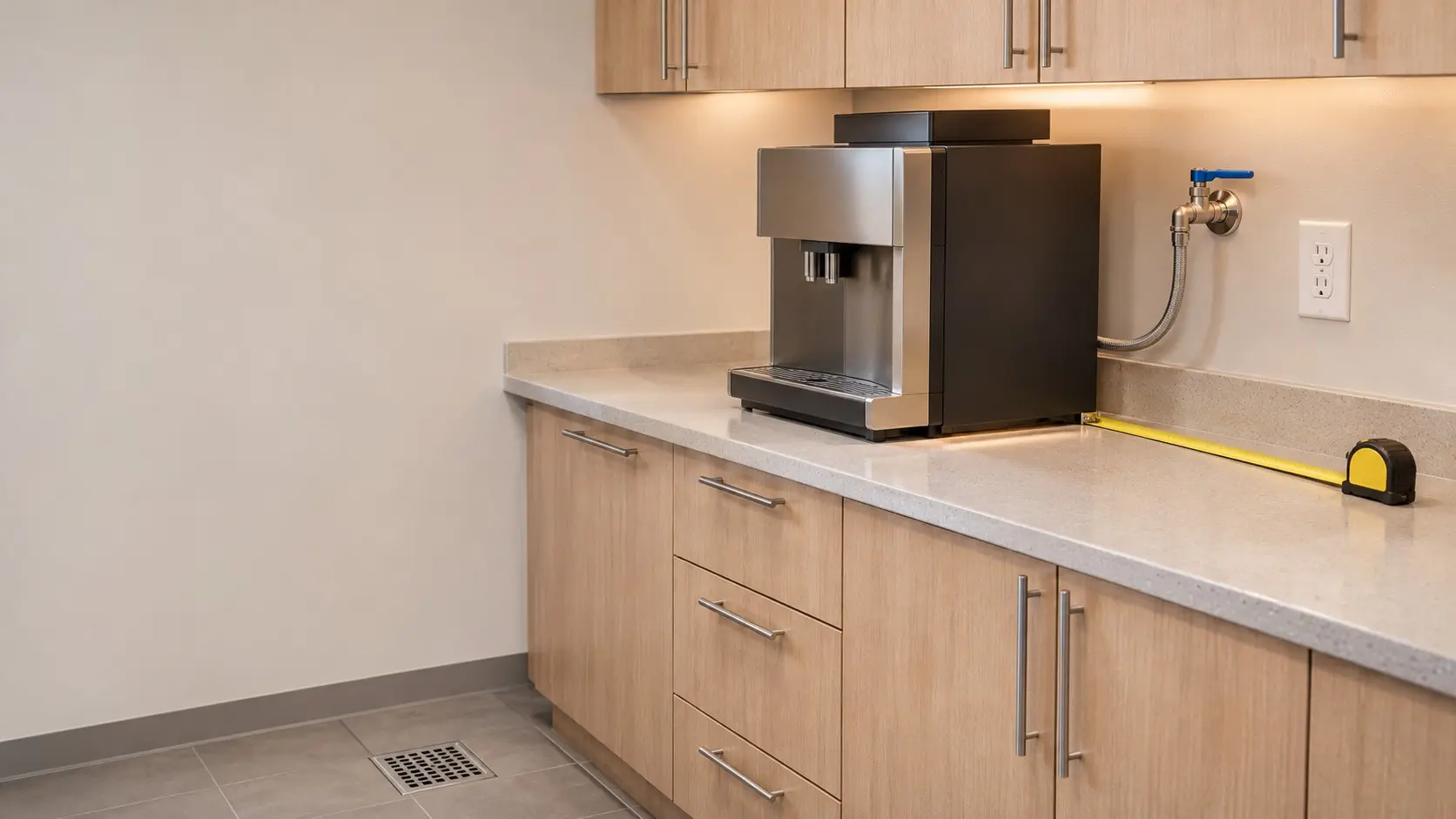
A break room needs a water supply, power, a place for waste water and enough space, all checked before delivery. A plumbed or large-tank machine is closer to a small appliance installation than to a countertop kettle, and the room should be ready for it.
The four basics
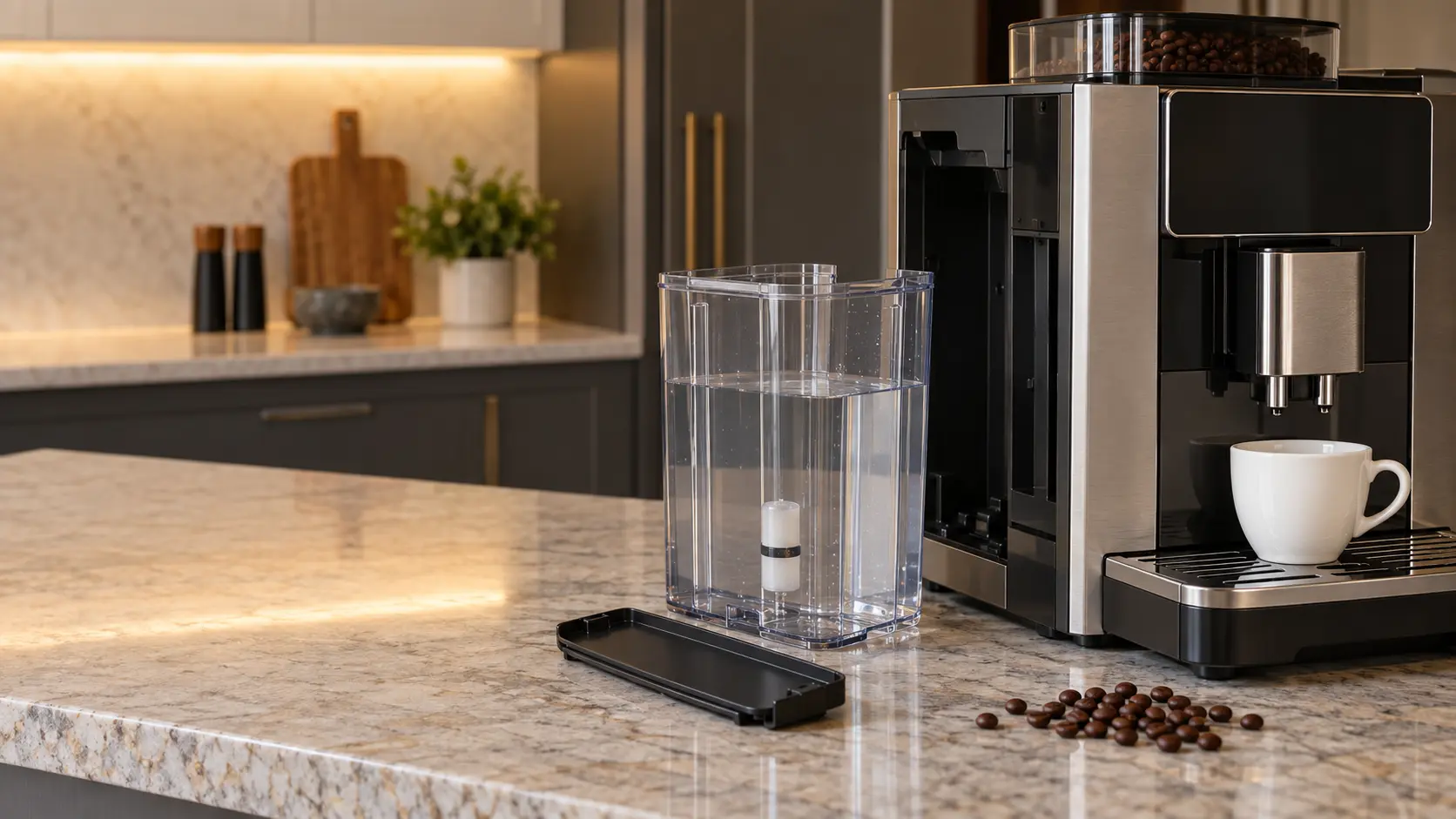
- Water: a cold supply line with its own shutoff, within reach of the machine, or a tank you can fill and lift safely.
- Power: an outlet that matches the machine's rating, on a circuit that is not shared with other heavy loads.
- Drain: a drip tray that is emptied regularly, or a connection to a drain for plumbed models.
- Space: counter depth and height, door swing and clearance around the unit.
Read the machine's installation sheet
The sheet or manual for your model gives the rating, the water connection and the clearances. Ask for it before delivery and compare it with the room. If you have the model number, the model plate guide shows where the machine states its own ratings.
How should the water line and filter be set up?
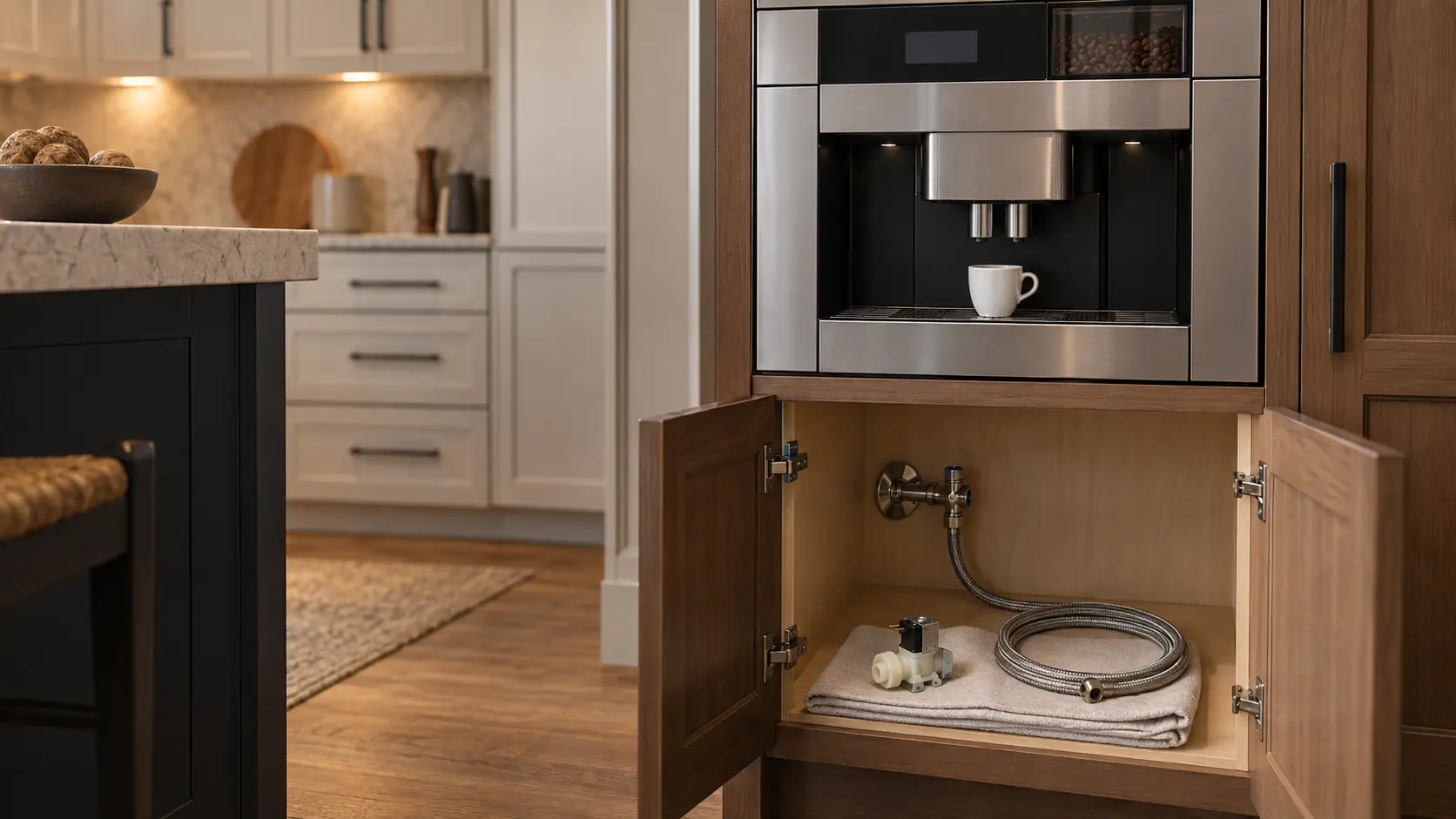
Use a dedicated cold-water supply with a quarter-turn shutoff you can reach, and put a filter in line if the machine's manual calls for one. A shutoff close by lets anyone in the office stop the water in a leak without searching for a main valve.
What the plumber should do
Have a plumber run the line, add the shutoff and connect the machine with the hose the maker specifies. Plumbing work is subject to local codes, so leave a new connection to someone who knows them. Give the plumber the installation sheet in advance: it states the inlet fitting and the water pressure range the machine accepts, and the plumber can tell you whether local code calls for a backflow preventer or check valve on a line feeding a beverage machine, and whether the supply needs a pressure regulator. After connection, check every joint dry, then again after an hour, as in the guide to connecting a plumbed coffee system.
Filters and hard water
Water quality shapes how long the machine lasts, since scale builds up in heaters and pipes. The hard water and the filter guide explains what the filter does and why it needs replacing on a schedule. A filter cartridge that is overdue lowers flow and shortens the life of the machine, so assign someone to track it.
Table: Water setup choices in an office
| Setup | Suits | Watch for |
|---|---|---|
| Plumbed line with filter | Busy offices, many drinks a day | Needs a plumber and a service schedule |
| Tank machine | Small offices, no plumbing nearby | Someone has to refill and descale |
| Plumbed with drain | Large machines that discharge rinse water | A proper drain connection and slope |

What power does a commercial-size machine need?
Check the electrical rating on the model plate and match it to an outlet and circuit that can carry the load. A large machine with a heater draws a lot of current and should not share a circuit with a microwave, kettle or toaster; if the installation sheet calls for a dedicated circuit, treat that as a requirement.
Outlet questions
- Is the outlet the right voltage and shape for the plug?
- Is it on its own circuit, or does something else trip it?
- Is it in reach without an extension cord?
- Is it protected where required, such as a GFCI near a sink?
If the answer to any is no, an electrician should fix it before delivery. Do not swap a plug or adapter to make it fit. The tripping breaker page explains why a tripped breaker is a sign to stop and check, not to keep resetting.
Where does the water go, and how much space is needed?
Machines with a drip tray need it emptied regularly, and plumbed machines with a rinse discharge need a drain at the right height. Waste water from rinse cycles has to go somewhere that is not the carpet.
Space around the unit
Measure the counter depth with the door open, the height under cabinets for filling and servicing, and the width around it so staff can reach the drip tray and bean hopper. Leave room at the back for hoses and access. An installation of a fitted system lists clearances for built-in models, and the built-in or countertop comparison helps if you are still choosing.
A floor that can take a leak
Put a tray or a waterproof mat under the machine where possible, and keep paper goods and electrics off the floor beside it. A slow leak under a cabinet can run unnoticed for weeks, a problem covered in water leaking into the cabinet.
Who cleans it, and how often?
Name a person or a service for daily cleaning and for descaling, because an office machine without an owner turns into a sour, scaled machine. Shared equipment gets less care than personal equipment.
A basic rota
- Daily: empty and rinse the drip tray and grounds container, wipe the spout and any milk parts.
- Weekly: clean the brew unit or dispenser parts as the manual says.
- On schedule: change the water filter and descale when due or when the display asks.
A coffee machine descaling service can take the scale job off the office, and a water line repair fixes the plumbing if a joint leaks later. If something is not working on day one, a diagnostic visit finds whether it is the machine or the room.