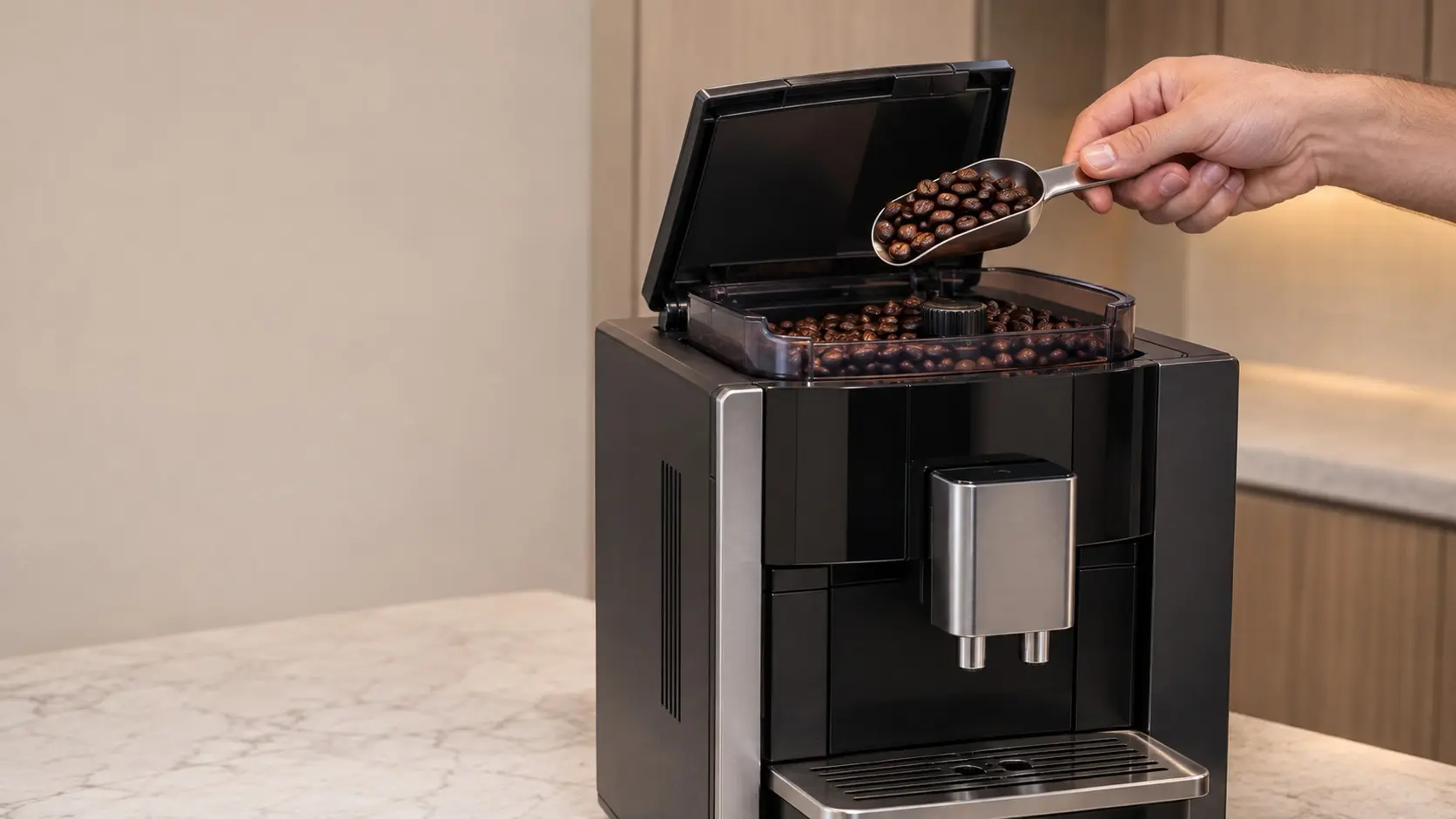


What makes coffee beans oily?
Roasting pushes the natural oils in a bean toward its surface, and the darker and longer the roast, the more of it you see. Time matters too: beans stored for weeks in a warm kitchen look shinier than the same beans fresh from the roaster.
A light shine is normal. The trouble starts when beans look wet, leave a mark on your fingers or stick together in the bag. In a hopper those same beans coat the walls and each other.
Which beans cause the most trouble?
Very dark roasts sold as "French" or "Italian" style, and anything described as extra dark, carry the most surface oil. Flavored beans are worse, because they have oils and syrups added after roasting. Caramel and vanilla coatings cling to everything they touch.
How can you tell before you buy?
Roll a few beans on a paper towel. A visible grease spot means high oil. Shiny, almost lacquered beans in a clear bag at the store are also a clue to a very dark roast or an old one.
How do oily beans affect the grinder?
Oil acts as glue. It sticks beans to the hopper walls, so they form an arch over the chute, and it coats the burrs and the chute so that grounds clump instead of falling freely.
- Beans stop dropping while the motor runs, with a light whirr.
- Grounds come out in lumps or smear in the chute.
- The grinder works harder, and the brew unit packs a wetter puck.
- Old oil turns rancid and gives a flat, bitter taste even in fresh beans.
Over months the buildup narrows the chute and slows the burrs, which is the same set of symptoms described in coffee grinder common problems.
Table: Bean type and what it does to the grinder
| Bean type | Oil level | Effect on the grinder |
|---|---|---|
| Light or medium roast | Low | Feeds freely, little buildup |
| Medium-dark roast | Moderate | Some film; wipe the hopper when you see it |
| Very dark, glossy roast | High | Bridging, sticky chute |
| Flavored or coated beans | High, with sugars | Clumping and film, best avoided |

How do you clear a hopper that stopped feeding?
Start with the machine off and unplugged. Only the hopper is meant for you to reach, so that is where all the work happens.
- Remove the lid and take out the beans with a dry scoop, putting them in a bowl.
- Wipe the walls and floor with a dry paper towel, then a barely damp one for any sticky film. Dry fully.
- Look at the chute opening with a flashlight for compacted grounds or a clump of beans.
- Lift out what you see with tweezers or a dry brush, without pushing anything deeper.
- Refill with a different, drier blend, plug in and run one small grind.
If the hopper looks clean and the grinder still runs without feeding, the blockage is below the opening. Stop there; that part of the grinder is for a technician, and the grinder repair service covers it.
How often should the hopper be cleaned?
Wipe the hopper whenever you see a film or feel a sticky floor; with light roasts that may take a month or more, with dark ones only a few weeks. Never top up old beans with new; empty the hopper before refilling so stale oil does not meet fresh beans.
Buy beans in amounts you finish in two to three weeks, and keep the bag closed. Do not store open beans in the hopper for weeks while you travel, as the oil sits on the plastic and the chute.
What should you never put through the grinder?
Do not run rice through a built-in grinder, and use a grinder cleaning product only if your manual names one. Hard grains can strain the burrs and leave starch dust in the chute.
What else does oil do to the machine?
Oil does not stay in the grinder. Fine grounds carry it to the brew unit, where it coats the sieve and the piston and makes the puck wet and sludgy. That is when you see slow flow, weak cups or a drip tray that fills fast.
A weekly rinse of the removable brew unit, as in cleaning the brew unit, removes the oily layer before it hardens. For machines where it cannot be removed, the brew unit repair covers deep cleaning and replacement.
If coffee has turned weak since you changed beans, see why the coffee comes out weak. When the grinder does not run at all, check the grinder symptom page.
What beans should you buy instead?
Choose beans that are dry or only lightly sheened, in a medium to medium-dark roast, with a roast date printed on the bag. A recent roast date matters more than the brand, because it tells you the oil has not had months to migrate.
- Buy a bag you will finish in two to three weeks.
- Keep it sealed, in a cool, dark cupboard, not in the hopper for days.
- Fill the hopper with only a few days of beans if you drink little coffee.
- Do not mix old and new beans; empty the hopper first.
If you love a dark roast, take it in small bags, wipe the hopper often and watch the chute. The first sign it is too much is beans that stop dropping while the motor still runs. Do not wait for a jam; switch blends the first time you see it.


