

What does a smelly coffee machine smell like, and where is it from?
The smell tells you which part of the machine to clean: sour points to milk, musty to water, stale to coffee oil, chemical to descaler, and anything hot or scorched to electronics. A machine mixes four things that rot or turn rancid when left alone, which are milk, water, wet grounds and coffee oil, and each leaves its own signature.
| Smell | Usual source | Clears with | How often |
|---|---|---|---|
| Sour, like spoiled milk | Milk container, tube, valve, frother | Rinse and the milk cleaning program | Daily and weekly |
| Musty, like a damp cellar | Tank water, drip tray, grounds container | Fresh water, wash and dry | Daily |
| Stale, rancid, bitter | Coffee oil in the brew unit and bean path | Brew unit rinse, degreasing tablet | Weekly and when prompted |
| Chemical, sharp, vinegary | Leftover descaler | Rinse cycles, correct descaler next time | After each descale |
| Hot plastic, scorched, ozone | Motor, heater or wiring | Stop and call | Not a cleaning issue |
If the odor is burnt rather than sour, read the coffee machine burning smell page first, because that case is about safety, not cleaning.
Why does the machine smell sour or like old milk?
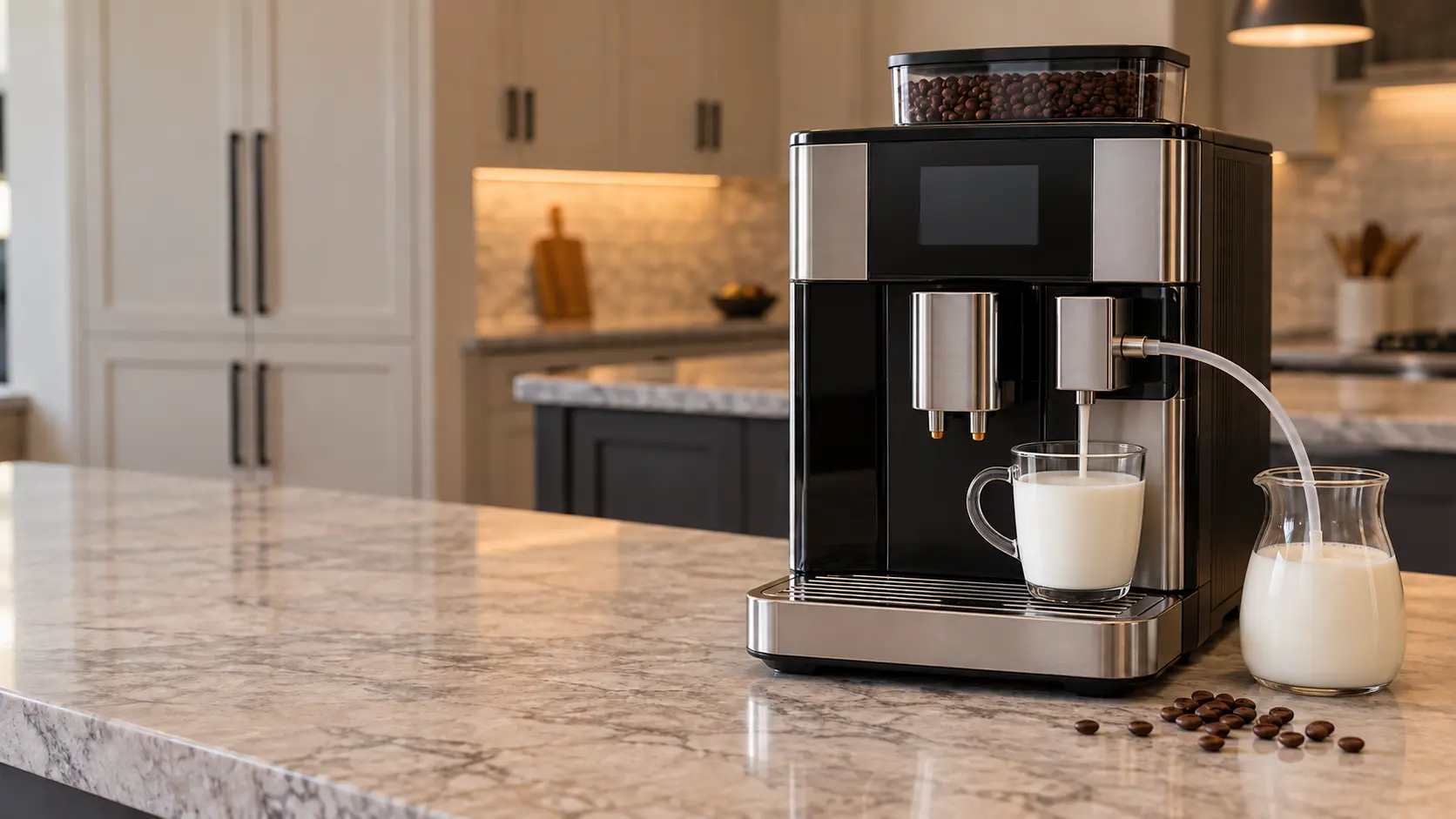
A sour smell means milk residue is sitting somewhere warm, and milk is the fastest of the four to turn. Milk passes through a container, an intake tube, a valve and a frother nozzle, and a film in any of them is enough. The owner's manual for many machines treats leftover milk inside the machine as a health risk and says all parts of the milk system need thorough, regular cleaning.
The milk path is the likely source when:
- the smell is strongest right after a milk drink or when the milk container is opened;
- the froth has turned thin or the spout spits;
- the container lid or intake tube feels slick or smells sour on its own.
The automatic rinse
Many machines rinse the milk path by themselves after a drink, or show a rinse message a few minutes after a milk drink. Switching the machine off at the wall right after a cappuccino skips the rinse and leaves milk in the line.
The container, lid and valve
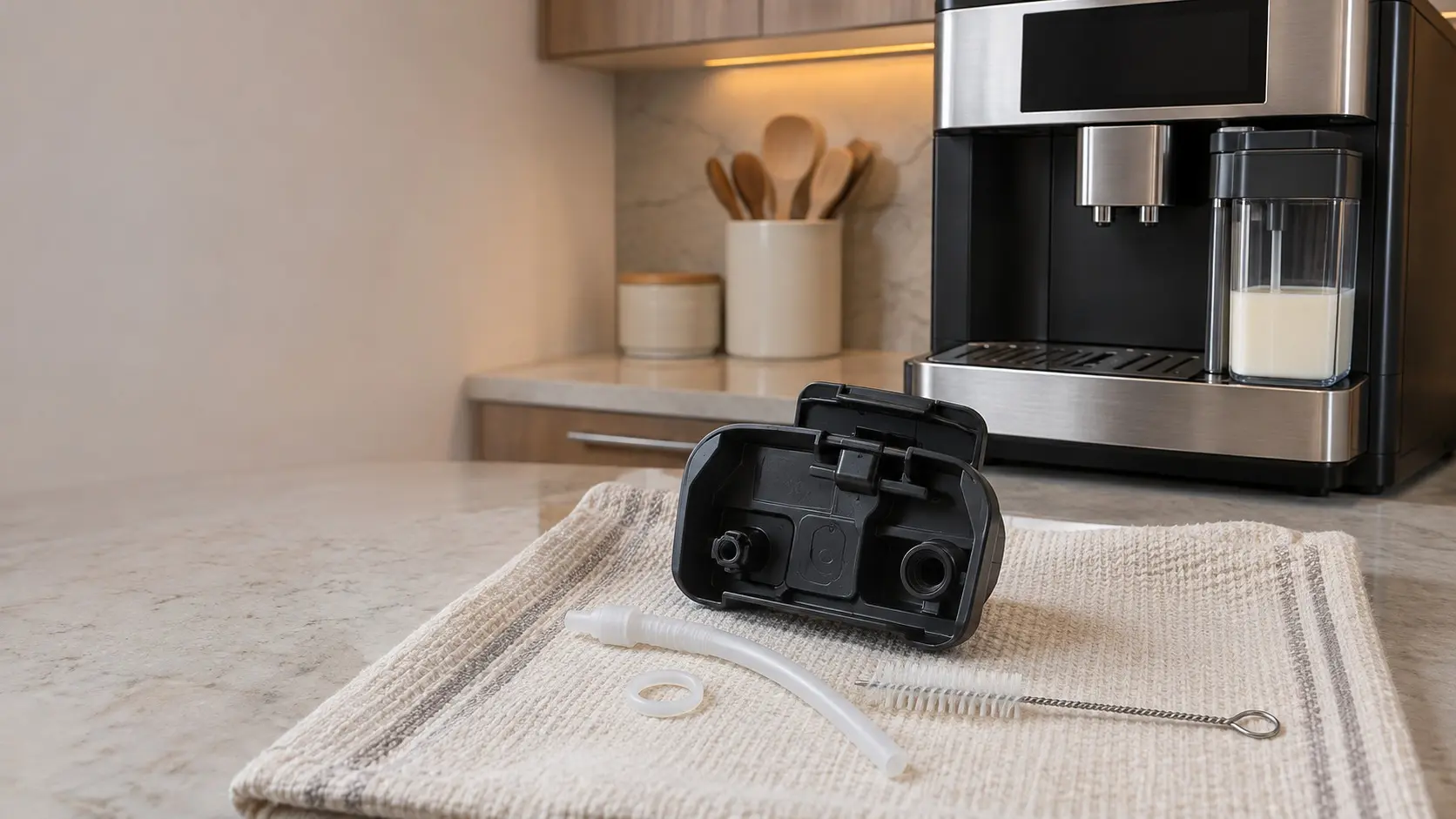
The rinse clears the path but not the fat that settles in the container and lid. Many manuals list the flask and lid as a daily job, the milk valve as a weekly one, and ask for the frother to be cleaned daily when milk has been used. Take the lid apart, brush the intake tube, and let every piece dry before storing it. The guide to caring for the milk system walks through each part, and the milk left standing guide covers how long milk may stay out.
Why does the machine smell musty or damp?
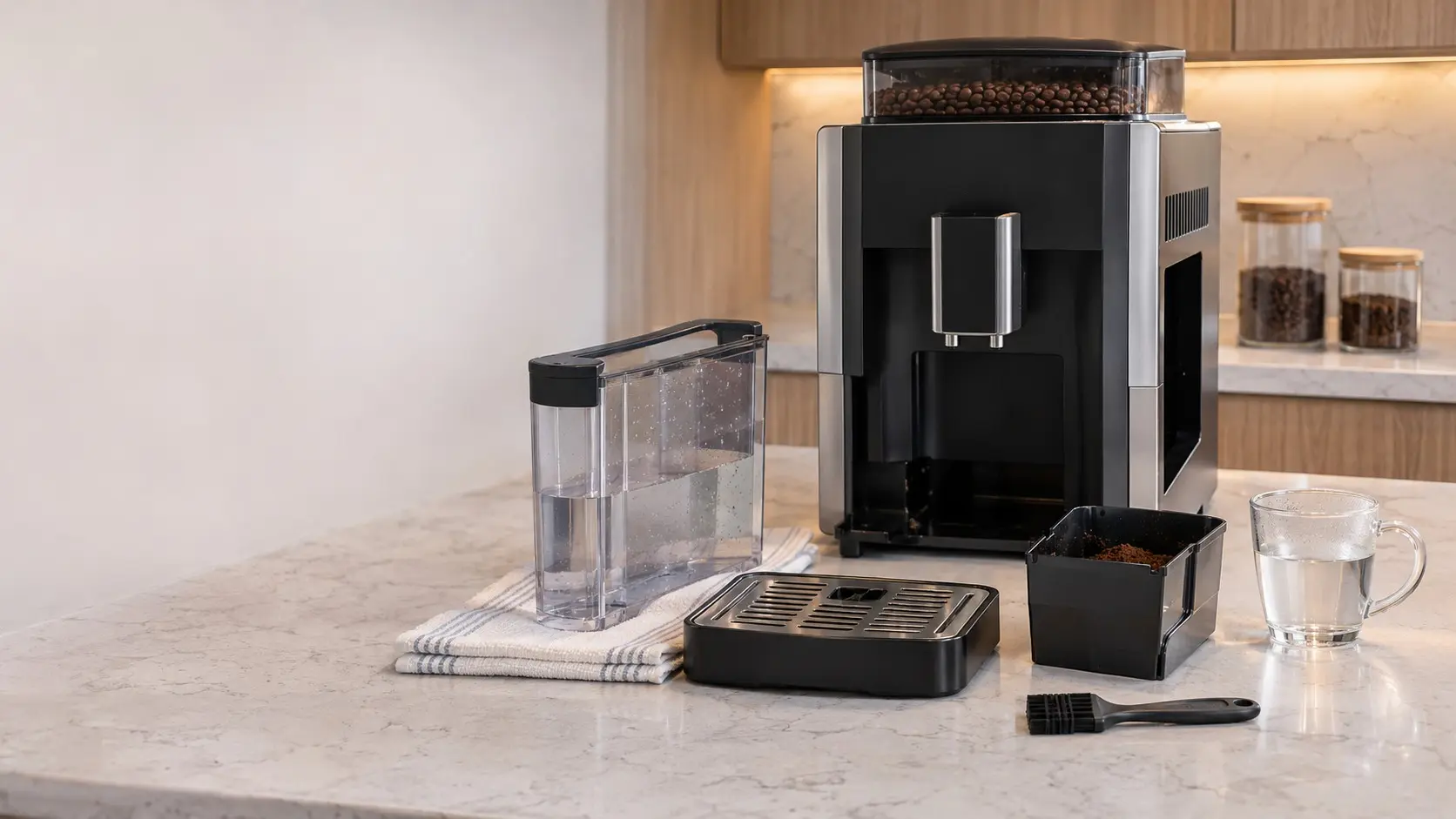
A musty smell means water or wet coffee has stayed put, most often in the tank, the drip tray or the grounds container. Manuals warn that coffee residues inside the machine can become moldy, which is why parts that hold wet grounds are on the regular cleaning list.
- Empty and rinse the drip tray and grounds container whenever the display asks and at the end of the day, then dry them.
- Pour out old tank water and refill with fresh cold water; many manuals say to change the tank water daily.
- Check the tank's valve and the bay behind it for a slimy film, and wipe it.
- If you have a water filter cartridge, replace it when the machine says so. Manuals say at the message or after a couple of months at the latest, and to rinse a new one first; check yours.
After a trip or a long absence, clean the machine before you make a drink. Many manuals ask for a thorough clean of the whole appliance, including the milk system, ground coffee drawer and brewing unit, if it has not been used for a lengthy period. For the tank and filter, see hard water and the filter.
What if the coffee and the machine smell stale or rancid?
A stale or rancid smell means coffee oil has built up on the brew unit, the grinder path or the bean container. Oil turns tacky, binds loose grounds into a crust and then spoils, which is also why coffee starts to taste bitter.
Rinse the brew unit if it comes out
On a model with a removable unit, the usual weekly job is to take it out and rinse it under warm running water with no soap, because soap damages the grease on the moving parts. Wipe the bay, dry the funnel and vacuum dry grounds before sliding the unit back in.
Run the degreasing tablet program
Rinsing removes grounds, but only a tablet program removes the oil. The machine prompts for it after a set number of drinks, and the program runs for several minutes; follow your manual for both. Do not interrupt it, and see countertop espresso machine repair if a countertop model keeps smelling after a full clean. Manuals note that tablets do not remove deposits from flavored coffee, so flavored beans may keep a smell that cleaning cannot clear. The brew unit cleaning guide covers both types.
The bean container
Old beans and oil on the hopper walls smell stale too. Empty the hopper when it is nearly bare, wipe it dry and refill with fresh beans in amounts you will use within a few days.
Why does it smell chemical after descaling?
A sharp or sour chemical smell after a descaling cycle usually means some of the descaler is still in the lines, and rinsing cures it. Run the rinse the machine asks for, then pull a few cups of hot water and discard them until the odor is gone.
Use only the descaler your manual names, since some acids and chlorides can damage a machine, and an interrupted descale may too. Never stop the program partway because of the smell. The descaling guide explains the programs, and the descaling service is there when the message will not clear.